
Join Books.org — it's free

Victorian & Edwardian Art, British Art, Artists - Biography, Post-Impressionism & Art of the fin de siecle, Pre-Raphaelites
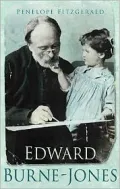
Edward Burne-Jones by Penelope Fitzgerald β€” book cover

Edward Burne-Jones

by Penelope Fitzgerald
Write a review
Log in to track your reading progress.

Overview

Edward Burne-Jones is perhaps best known for his King Cophetua and the Beggar Maid and as the designer of stained glass and tapestries for Morris and Co., the firm set up by his lifelong friend William Morris. This biography traces Burne-Jones's life, and suggests a deeper understanding of his work. It tells of his beginnings as a solitary child in Birmingham, the only son of a not too successful picture-framer, and his formative years at Oxford where, with Morris, he felt the powerful influence of Ruskin and the Pre-Raphaelites. In 1860 he married the nineteen-year-old Georgiana Macdonald. This book describes their life together, Georgie's constant loyalty throughout his periods of illness and his infatuations with striking young women, and his love for his children: he was slave to his beautiful daughter, Margaret, and bewildered by his difficult son, Phil. But Burne-Jones was, in fact, a very sympathetic man, and a great wit. This can be felt in his caricatures of Morris and others at work and play, and his friendships, not only with fellow artists but with his patrons John Ruskin and Arthur Balfour, with Oscar Wilde and Henry James, and his nephews by marriage, Stanley Baldwin and Rudyard Kipling.

About the Author, Penelope Fitzgerald

Penelope Fitzgerald
"I've heard my novels described as 'light,' but I mean them very seriously," Penelope Fitzgerald has written. And while it's true that the tone and humor in her novels may belie the insight they carry, the award-winning Fitzgerald has always been a writer that people do indeed take seriously.

Biography

Although some of her novels were published previously in the U. S., Penelope Fitzgerald remained little known to a general American audience until 1997, when Houghton Mifflin's trade paperback imprint, Mariner, published The Blue Flower, which was chosen as an Editor's Choice by the New York Times Book Review, and won the 1998 National Book Critics Circle Award.

The then 81-year-old Fitzgerald was selected as winner of the NBCC Award over fellow nominees Don DeLillo, Philip Roth and Charles Frazier, winning her first American literary award. In her native England, Fitzgerald had long been a favorite of critics and writers. Her novel Offshore won Britain's prestigious Booker Prize, and three of her novels -- The Bookshop, The Gate of Angels, and The Beginning of Spring -- were finalists for the Prize.

Fitzgerald began her writing career late in life. She was sixty years old in 1977 when her first novel, The Golden Child, was published, a book she wrote to entertain her husband, who was dying of cancer. Much of her previous sixty years' experience informs her writing, from her days as a lowly assistant at the BBC (Human Voices), to a stint living on a houseboat in the Thames (Offshore), to working at a bookstore in a seaside village (The Bookshop).

Fitzgerald was born into a distinguished intellectual and professional family, the daughter of E. V. Knox, who was editor of Punch, and the granddaughter on both sides of Anglican bishops (her father and three uncles are the subjects of her biography, The Knox Brothers). She won a scholarship to Oxford and graduated shortly before the Second World War.

With her husband, Desmond, she ran a small literary journal called the World Review, which reprinted pieces by such writers as Jean-Paul Sartre and Dylan Thomas.

Author biography courtesy of Houghton Mifflin.

Good To Know

Dinitia Smith, in her New York Times obituary of May 3, 2000, quoted Penelope Fitzgerald from 1998 as saying, "I have remained true to my deepest convictions, I mean to the courage of those who are born to be defeated, the weaknesses of the strong, and the tragedy of misunderstandings and missed opportunities, which I have done my best to treat as comedy, for otherwise how can we manage to bear it?"

While studying on scholarship at Oxford, one of Fitzgerald's fellow students was J.R.R. Tolkien.

Reviews

There are no reviews yet. Log in to write one.

Book Details

Published
September 4, 2003
Publisher
Sutton Publishing Ltd
Format
Paperback
ISBN
9780750934343

More by Penelope Fitzgerald

Similar books