
Radiology & Diagnostic Imaging, Orthopedics, Medical Technology, Neurology, Physiology - Nervous System, Neurophysiology, Diagnosis
Log in to track your reading progress.
Overview
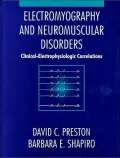
Electromyography and Neuromuscular Disorders combines the key elements of both clinical and electrodiagnostic medicine to aid the clinician in evaluating patients with neuromuscular disorders. The text serves as a practical manual in performing and interpreting nerve conduction studies and electromyography, while focusing on clinical-electrophysiologic correlations. All of the major neuromuscular disrders are reviewed from both the clinical and electrophysiologic points of view. Actual case studies are utilized to emphasize the major points.
The book contains black-and-white illustrations.
Editorials
From The Critics
Reviewer: Yaman Daaboul, MD(University of Illinois at Chicago College of Medicine)Description: This book copiously and clearly covers the technical aspects of electromyography (EMG) emphasizing the clinical-neurophysiological correlation. It also approximates how the clinical neurophysiologist thinks when approaching a complicated patient.
Purpose: The purpose of this book is to teach the clinical approach to neurophysiology and provide a practical approach to a patient in the EMG lab.
Audience: The book is written primarily for clinicians who perform and interpret nerve conduction studies and electromyography, as well as for physicians who use the results of these electrodiagnostic studies to evaluate patients with peripheral nervous system disorders. It will also be very helpful to neurology and electrophysiology trainees. The authors are well known in this field and both are from Harvard Medical School.
Features: The book is illustrated with many excellent quality photographs, line drawings, diagrams, and tables. Each chapter has a brief list of up-to-date references. The index and table of contents are complete. Overall this is an attractive book, complete and simple.
Assessment: Although several excellent texts cover the technical, and to some extent clinical, aspects of EMG, this book is unique in its emphasis on clinical and electromyograghic correlation, and I highly recommend it to the electrophysiology trainee. There will be a place for this book in the medical library, bookstore, and neurophysiology lab.
Yaman Daaboul
This book copiously and clearly covers the technical aspects of electromyography (EMG) emphasizing the clinical-neurophysiological correlation. It also approximates how the clinical neurophysiologist thinks when approaching a complicated patient. The purpose of this book is to teach the clinical approach to neurophysiology and provide a practical approach to a patient in the EMG lab. The book is written primarily for clinicians who perform and interpret nerve conduction studies and electromyography, as well as for physicians who use the results of these electrodiagnostic studies to evaluate patients with peripheral nervous system disorders. It will also be very helpful to neurology and electrophysiology trainees. The authors are well known in this field and both are from Harvard Medical School. The book is illustrated with many excellent quality photographs, line drawings, diagrams, and tables. Each chapter has a brief list of up-to-date references. The index and table of contents are complete. Overall this is an attractive book, complete and simple. Although several excellent texts cover the technical, and to some extent clinical, aspects of EMG, this book is unique in its emphasis on clinical and electromyograghic correlation, and I highly recommend it to the electrophysiology trainee. There will be a place for this book in the medical library, bookstore, and neurophysiology lab.Booknews
A reference for clinicians who perform and interpret nerve conduction studies and electromyography (EMG), and for physicians who use the results of these studies to evaluate patients with peripheral nervous system disorders. Section I covers the overall approach to the patient in the EMG lab, and reviews basic anatomy and neurophysiology, while Section II discusses fundamentals of nerve conductions, including motor, sensory, and mixed nerve studies. Section III explains technical factors and artifacts, including anomalous innervations, Section IV discusses practical details of performing common nerve conduction studies, and Section V focuses on needle EMG. Section VI, the core of the material, describes major peripheral nervous system conditions, from both the clinical and electrophysiologic points of view, and presents clinical cases and their nerve conduction and EMG data. Includes b&w photos. Annotation c. by Book News, Inc., Portland, Or.3 Stars from Doody
Book Details
Published
November 3, 1997
Publisher
Boston : Butterworth-Heinemann, c1998.
Pages
592
Format
Hardcover
ISBN
9780750697248