
Ancient Cultures, Ancient Egypt - History, Africa - History
Log in to track your reading progress.
Overview
In a unique approach, the Art and Civilization of Ancient Egypt reproduces thirteen key works of Egyptian art and a host of other artifacts to explore and explain the civilization that produced them. The book begins with the unification of Egypt into a single kingdom, as portrayed on the Narmer Palette in 3100 BC.
A brief, illustrated, overview of the geography, history, customs, beliefs, monuments, day-to-day life, and social structure of ancient Egypt, a civilization that flourished for almost 3,000 years.
Synopsis
This text presents a general view of ancient Egyptian life and culture set in the specific geography of the land and its river, the Nile, within the historical framework of the dynastic sequence.Editorials
Children's Literature
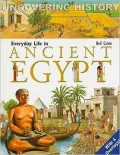
From the Predynastic Era beginning around 3150 B.C. through the Greek and Roman Period ending in 641 A.D., this book examines the changing life in ancient Egypt. It tells why the Nile, the "river of life," whose flooding created black fertile soil, was crucial to the development of life in Ancient Egypt. Since all aspects of Egyptian life were connected to their gods and goddesses, the most important ones are pictured and their roles are described. The significant role of death and the afterlife is explained, as well as the story of mummies and the evolution of pyramids. Before the age of pyramids, kings were buried in elaborate underground tombs, called Mastabas. As these tombs became more elaborate, they evolved into the pyramids. One segment is devoted to the Valley of the Kings where so many burials took place. The reader learns how drawings and artifacts left in the pyramids have helped researchers learn a great deal about life in ancient Egypt. The book explains the development of paper and writing, agriculture, food, warfare, the role of women, clothing and appearance, fun and games, homes, craftspeople and trade. Each page has many illustrations that amplify the text. Some pages have acetate overlays to give an inside/outside view. All in all, it provides an excellent overview of life in ancient Egypt. It would benefit, though, from a bibliography. It does feature a helpful index. It is from the publisher's "Uncovering History" series. 2004 (orig. 2001), Smart Apple Media, Ages 9 to Adult.— Janet Crane Barley
School Library Journal
Gr 4-6-Large, colorful illustrations are the major part of these two books. Drawings often accompany the photographs of artifacts, enhancing the explanations of daily life and culture in these early civilizations. A short paragraph introduces each chapter; otherwise the text serves mainly as captions. The introductions often contain facts not discussed in the body of the books, and the depth of information in them is about as thorough as that in subsequent chapters. For example, in Egypt, agriculture, irrigation, and the calendar are mentioned in the opening paragraphs, but the chapters that follow focus more on particular subjects, such as pyramid builders or death and the afterlife. The indexes list mainly proper nouns rather than subjects, thus limiting the books' usefulness for reports.-Carolyn Janssen, Children's Learning Center of the Public Library of Cincinnati and Hamilton County, OH Copyright 2000 Cahners Business Information.Book Details
Published
January 1, 2008
Publisher
McRae Books
Pages
48
Format
Hardcover
ISBN
9788889272558