
Technology - General & Miscellaneous, Biology & Life Sciences, Agricultural Sciences, Agricultural Sciences, Technology - General & Miscellaneous, Biology, Genetics
Log in to track your reading progress.
Overview
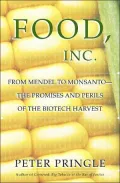
In Food, Inc., acclaimed journalist Peter Pringle shows how both sides in this overheated conflict have made false promises, engaged in propaganda science, and indulged in fear-mongering. In this urgent dispatch, he suggests that a fertile partnership between consumers, corporations, scientists, and farmers could still allow the biotech harvest to reach its full potential in helping to overcome the problem of world hunger, providing nutritious food and keeping the environment healthy.Editorials
The New York Times
Anyone who picks up this book -- except for those hopeless flacks at Monsanto and their tormentors on the picket lines -- will find Food, Inc. to be a feast of honest reporting and serious thought. It's about time. — Greg CritserThe Los Angeles Times
In this elegantly succinct and well-researched book, Pringle takes us from the mid-19th century laboratory of the Moravian monk Gregor Mendel to the courtrooms, town halls and universities where activists like Jeremy Rifkin fight conglomerates like Calgene and Monsanto. Pringle describes experiments that failed or were too hastily abandoned: golden rice, for instance, which is replete with vitamin A in the form of beta carotene and that was going to solve the problem of blindness in Third World countries.Food, Inc. proves beyond doubt that you really know more when you are able to admit how little it is that you actually know. — Susan Salter ReynoldsThe Washington Post
In challenging both the "bland assurances" of the proponents of this technology and the "scaremongering" of "environmental ideologues," he invokes the proverbial plague on both their houses. Contrary to his intention, however, Food, Inc. demonstrates how difficult it is to maintain neutrality in debates about the necessity or value of GM foods. Instead, this book is a compelling indictment of corporate power exercised under the guise of altruism. — Marion NestleThe New Yorker
In 1998, just as the battle over genetically modified food was heating up, the Monsanto C.E.O. Robert Shapiro—one of the men who represented O. J. Simpson—was struck in the face by a tofu cream pie hurled by enraged eco-protesters in San Francisco. Shapiro has moved on from Monsanto, the chemical giant that created Agent Orange and that, since the nineteen-eighties, has become a powerhouse in transgenic crop technology—the practice of inserting foreign genes (from, say, fireflies or chicken) into corn, potatoes, and rice. In Food, Inc., the veteran reporter Peter Pringle offers a refreshingly measured look at this brave new world of “gene guns,” Flavr Savr tomatoes, contaminated taco shells, lax regulatory oversight, dwindling crop diversity, rapacious “biopirates,” and geneticists toiling in grenade-proof greenhouses (opponents have been known to resort to tougher tactics than tofu pies). It’s possible that the pie that hit Shapiro was created from modified soybeans, which are eaten by millions of people every day.The potential upside of genetically modified foods is huge: making pesticides obsolete, creating huge yields, and ending world hunger. But the opposition from environmentalists and creationists—fuelled by superstition as much as science—has focussed on the potential for disaster, such as new human allergies. Kathleen Hart’s Eating in the Dark is a concerned-citizen approach to the ongoing controversy that cites such respected scientific journals as Lancet for support. Whether these so-called “Frankenfoods” lead to a well-fed Utopia or to an ecological Armageddon, the G.M. revolution is, at least, helping to boost sales of organic food. (Mark Rozzo)
Publishers Weekly
Imagine a world where yellow beans are patented, aromatic basmati rice has lost its fragrance because of genetic tinkering and Canadian farmers are sued by multinational behemoths because pollen from GM (genetically modified) crops somehow got into their fields and fertilized their plants. You don't have to imagine it: this, says Pringle, is the world we live in today. A widely published journalist, Pringle (Those Are Real Bullets) paints a troubling picture of the world's food supply. Multinational corporations are able to patent genes from crops that have been cultivated by farmers for centuries; governments of starving African nations refuse GM food they fear is poisonous; scientists hastily publish research that is blown out of proportion by the news media; and "green" activists vandalize greenhouses and fields where scientists are conducting GM research. Pringle roundly castigates all sides. Scientists, he says, have been remarkably inventive in their endeavors to improve the food we eat, using a gene from daffodils, for example, in growing golden rice with high levels of vitamin A that can help prevent blindness in the undernourished. But large corporations, he asserts, have squandered the public's good will toward GM products as they rushed so-called "Frankenfoods" into stores without adequate testing or disclosure of what makes it different. Pringle gives some glimmer of hope for the future through time-honored methods of cross-pollination, but his main story is of an industry with great potential for feeding starving millions and reducing our reliance on chemical pesticides, but that has instead created a global mess. Agent, Amanda Urban. (June 10) Copyright 2003 Reed Business Information.Library Journal
Journalist Pringle (Those Are Real Bullets) believes that there is nothing inherently unsafe about genetically modified (GM) foods and that technology has the potential to relieve hunger and pain for millions of people. However, in this discussion of the aspects of GM foods, he does not hesitate to point out the perils. Aside from potential crop and environmental contamination from lab-altered genes, especially troubling to the author is the degree to which plant biotechnology gives control to a few international conglomerates that own patents to the products and processes. Similar in coverage and style to Daniel Charles's Lords of the Harvest and Bill Lambrecht's Dinner at the New Gene Cafe, Pringle's work also relates very recent developments such as biopharming (growing pharmaceuticals in corn crops) and how several starving African countries refused donations of U.S. corn because it contained genetically modified seeds. This book is intended for a general audience and, as such, is well suited for public libraries and for undergraduate collections in academic libraries.-William H. Wiese, Iowa State Univ. Lib., Ames Copyright 2003 Reed Business Information.School Library Journal
Adult/High School-Biotechnology inspires hope in some and horror in others. A complex topic, it invokes many contemporary concerns-third world famine, biodiversity, corporate responsibility, the ethics of corporate ownership of the processes of life itself-and involves a bewildering array of interrelated national and international legal, political, scientific, and economic forces. Public discourse is polarized with scaremongering on one side and arrogance on the other, and it is difficult for the nonspecialist to arrive at an informed opinion. Here, in readable, journalistic fashion, Pringle provides what has been missing: facts and explanations, reasoned argument, and common ground. He reveals many dimensions of several controversies that will be familiar to most readers from media coverage, yet remain poorly understood: Is the monarch butterfly endangered by pesticide-laced corn? Are we throwing away our heritage of biodiversity? Are plant hunters cultural pirates? As the title indicates, Pringle points out the danger of a few large and poorly regulated corporations owning and controlling so much of the world's agriculture and genetic technology, but he doesn't demonize. Rather than simplifying a complicated subject, he accomplishes the more difficult task of presenting the complexities of genetic science, academic politics, corporate strategies, or international treaties in such a clear and interesting manner that readers come to appreciate and understand them. This is a book to satisfy curiosity and engender concern, and any of its chapters would provide an excellent subject for discussion groups.-Christine C. Menefee, Fairfax County Public Library, VA Copyright 2003 Reed Business Information.Kirkus Reviews
Two cheers for transgenic tomatoes and Frankensteined frankfurters. Well, maybe a cheer and a half. Insofar as Pringle (Those Are Real Bullets, 2001, etc.) is concerned, the widespread adoption of genetically modified (GM) foods may harbor significant perils but, all the same, may well relieve hunger for a significant chunk of the planet’s populace "if governments, industry, and overzealous sentries don’t stand in the way"—or, more to the point, don’t get too greedy in carving up the market. For the time being, whether we like it or not, that market is pretty much confined to America; as Pringle notes, GM crops have been banned from Europe and Japan, and the starving nation of Zambia even rejected US grain shipments for fear that croplands would be overrun by seeds produced by agricultural monopolies. And there’s the rub: it’s not so much that the world fears the blowback from eating food whose molecules have been tinkered with, Pringle suggests, but that GM food remains a private-sector initiative, and the private sector, in the words of an Ethiopian economist, "will not focus on the needs of the poor, except as a way to sell its products." Though wary of health and environmental consequences himself, Pringle attributes much of the problem surrounding GM foods to the failure of producers to explain their ambitions to the consuming public, having preferred instead to sneak such things as Flavr Savr tomatoes and "ice-minus" strawberries onto shelves in the apparent hope that no one would notice. There’s not much zest in these pages, but Pringle manages to avoid the hype and sensationalism that color both sides of the argument even as he notes that the so-called biotech revolution isnow all but stalled, owing to the resistance of consumers, farmers, and governments alike. A meaty addition to the growing GM debate. Agent: Amanda Urban/ICMBook Details
Published
September 15, 2003
Publisher
New York ; Simon & Schuster, c2003.
Pages
256
Format
Hardcover
ISBN
9780743226110