
Public Opinion, General & Miscellaneous Literary Criticism, German Literature, English Literature
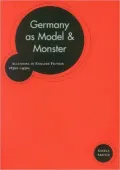
Available on Bookshop
Write a review
Books.org participates in affiliate programs including Bookshop.org and the Amazon Services LLC Associates Program. We may earn a commission from qualifying purchases made through links on this page, at no additional cost to you.
Log in to track your reading progress.
Overview
By examining the works of George Eliot, Carlyle, Edward Bulwer-Lytton, George Meredith, George Gissing, Joseph Conrad, E.M. Forster, and D.H. Lawrence, as well as several post-World War II novels, Argyle explores the Goethean ideal of Bildung and the Bildungsroman (self-culture and the apprenticeship novel), Heinrich Heine's anti-philistinism, music, the Tübingen higher criticism, Schopenhauer's and Nietzsche's philosophies, Prussianism, and avant-garde culture in the Weimar Republic. To establish the status of these allusions in the public conversation, Argyle moves between literary and extra-literary contexts, including biographical material about the authors as well as information from contemporary literary works, periodical articles, and other documentation that indicates the understanding authors could assume from their readers. Her methodology combines theories of allusion and intertextuality with reception theory.Editorials
From the Publisher
"Invaluable work, extremely well documented, knowledgeable, clearly written and organized - in short, a significant contribution to our understanding of the English novel. I know of nothing else like it." Allan Pasco, author of Allusion: A Literary Graft "Sound scholarship. With admirable thoroughness, Argyle identifies and describes the many allusions in English fiction of the nineteenth and twentieth centuries that bear on the English authors' interest in German writers whose works have served as models of cultural critique or generic development." Robert O'Kell, Department of English, University of ManitobaBooknews
In the context of historical Anglo-German antagonism, Argyle (humanities, York U.) studies German allusions by British novelists who criticize English society and literature via comparison with "more cosmopolitan" German philosophies and aspects of life. Such novelists looking to the ideas of Goethe, Heine, Nietzsche, et al., include Edward Bulwer-Lytton, George Meredith, and George Eliot. This inquiry<-->modeled after Jauss's reception theory (1970) that stresses reader's "horizons of expectations"<-->proceeds through waves of English popularization of fiction, beginning with Thomas Carlyle's "Germanizing" efforts in the 1830s, and concludes with the influence of the Second Weimar Republic's avant garde culture on Ford Madox Ford, D.H. Lawrence, and C. Isherwood. Includes satirical cartoons. Annotation c. Book News, Inc., Portland, OR (booknews.com)Book Details
Published
August 2, 2002
Publisher
Montreal : McGill-Queen's University Press, c2002.
Pages
272
Format
Hardcover
ISBN
9780773523517