
Fiction - Entertainment & The Arts, Fiction - Historical Fiction, Fiction - Historical People
Log in to track your reading progress.
Editorials
Children's Literature -
This imaginary retelling of the writing of the now famous Rhapsody in Blue by George Gershwin is aimed at middle elementary students. Gershwin, one of America's most famous young composers in the 20's and 30's, is challenged by conductor Paul Whiteman to create a musical piece that reflects the changing music of the day. Feeling at first inadequate for the job, Gershwin finds inspiration from the sights and sounds of New York City, both musical and non musical. With encouragement from his brother Ira and friend Buddy DeSylva, who are also involved in producing Broadway musicals, George finally performs his now famous symphony with the Paul Whiteman orchestra in February, 1924 to thunderous applause. George is only twenty-six years old. This story, although based on research, takes liberties in its creation of actual conversations between the characters and does not seem to capture the excitement of those Tin Pan Alley days in New York City. The illustrations, although well done, add to the rather staid quality of the story. A CD of Rhapsody in Blue is included.School Library Journal
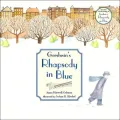
Gr 1-5-The creation of Gershwin's 1924 masterpiece is the subject of this picture book. The story, rendered in watercolor-and-ink caricatures, opens in the legendary pool hall where George's brother Ira discovers a newspaper announcement for a concert at which his sibling's new jazz concerto is to be featured-only it hasn't been written yet. After the disbelief subsides and the conductor who placed the ad is confronted, the musical genius embarks on a journey in which doubt, inspiration, and frustration overlay frenzied periods of intense work. Celenza's tale, complete with invented dialogue, brings the composer to life. The text incorporates musical ideas to discover the "klezmer howl" of the opening clarinet, the blues, and the "love song for New York" in the main theme. An author's note contains Gershwin's words describing the rhythm of the train ride that freed his mental block, providing ideas for content, style, and direction. Kitchel's sensitivity to this source material is especially evident in her spread of multifaceted patterns and images, presented as cameos against a black background; they relate to the composer's concept of a "musical kaleidoscope of America." An accompanying CD features Gershwin himself (courtesy of a piano roll). Pair this with Robert Burleigh's Langston's Train Ride (Scholastic, 2004) to compare how a trip on an iron horse affected another American artist from the same period.-Wendy Lukehart, Washington DC Public Library Copyright 2006 Reed Business Information.Book Details
Published
July 1, 2006
Publisher
Charlesbridge Publishing, Inc.
Pages
32
Format
Other Format
ISBN
9781570915567