
Children - Fiction & Literature
Log in to track your reading progress.
Synopsis
After learning that he is going deaf, Beethoven is determined to write a great symphony using the heroic deeds of Napoleon as his initial inspiration.
Publishers Weekly
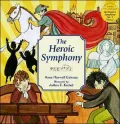
In a companion to their The Farewell Symphony by Anna Harwell Celenza, illus. by JoAnn Kitchel, the author focuses on the development of Beethoven's The Heroic Symphony. After a brief biographical background of the composer, Celenza describes his friendship with musician Ferdinand Ries (whose biography of Beethoven was a source for the book). Boldly colored illustrations with kinetic outlines contrast with vintage-looking pastel backgrounds. A CD recording of the piece performed by the Chicago Symphony Orchestra is included. Copyright 2004 Reed Business Information.
Editorials
Publishers Weekly
In a companion to their The Farewell Symphony by Anna Harwell Celenza, illus. by JoAnn Kitchel, the author focuses on the development of Beethoven's The Heroic Symphony. After a brief biographical background of the composer, Celenza describes his friendship with musician Ferdinand Ries (whose biography of Beethoven was a source for the book). Boldly colored illustrations with kinetic outlines contrast with vintage-looking pastel backgrounds. A CD recording of the piece performed by the Chicago Symphony Orchestra is included. Copyright 2004 Reed Business Information.Children's Literature
Ludvig van Beethoven was the best pianist in Vienna when he started losing his hearing. He tried eating a special diet, exercising, and "resting" his ears to no avail. He felt that if he could not live with music, there was no reason to live at all. In his depression, however, a sorrowful melody came to him and he realized he could express his emotions in music. At the time, Napoleon Bonaparte was a hero of the people because he had rid France of an unjust king and promoted education and freedom for all. Beethoven equated his struggles with Napoleon's and a new symphony came to him. The first movement is a searing battle depicting the struggle all of us have fighting injustice. The second contains all of humanities sorrows and sufferings. The third is a dance of exultation and joy—the battle is over and it is time to celebrate. The fourth contains a repeating refrain that speaks of peace and tranquility—all is well. Just as Beethoven put on the finishing touches, Napoleon crowned himself King of France. Beethoven felt betrayed. Napoleon was no better than the despots he had overthrown. Beethoven ripped the symphony to shreds. Fortunately his friend, Ferdinand, saw the scraps of paper and grabbed the second copy, thereby saving a masterpiece. The symphony (originally named Bonaparte) was renamed "The Heroic Symphony" and stands for the hero in all of us. The straightforward text is easy to follow and comes with a CD of the symphony. 2004, Charlesbridge, Ages 8 to 10.—Janet L. Rose
School Library Journal
K-Gr 4-As in their previous collaborations, Celenza brings a famous musician to life while Kitchel provides energetic art. This time, they present the story of Beethoven's despair over his deafness and his eventual triumph as he gives himself over to the symphony that highlights his struggle to survive as a musician. Originally written as a celebration of Napoleon's victory, the four movements were meant to reflect Bonaparte's courage and heroism. Soon after Beethoven completed them, however, he discovered the great warrior's treachery in declaring himself Emperor of France. The composer ripped a copy of the score he had intended as a gift, but his friend Ferdinand Ries prevented him from destroying the composition. The Bonaparte Symphony was later renamed the Eroica, or Heroic Symphony. Celenza's research into the details of this piece of music reflects her scholarly background; she unearthed primary-source material that is described in an author's note. The stylized watercolor-and-ink paintings evoke the mood of each movement; for the first one, Napoleon's horse seems to jump right out of the musical score. To reflect the French origins of the symphony, Kitchel backs most of the illustrations with a toile design. Although there are many books on this composer, such as Barbara Nichol's Beethoven Lives Upstairs (Orchard, 1994) and Mike Venezia's Ludwig van Beethoven (Children's, 1996), this one, with its emphasis on one segment of his life, is a worthwhile purchase.-Laurie Edwards, West Shore School District, Camp Hill, PA Copyright 2004 Reed Business Information.Kirkus Reviews
This companion to The Farewell Symphony (2000) and Pictures at an Exhibition (2003) melodramatically recounts the genesis of Beethoven's Third Symphony. Unable to stave off his growing deafness, the young composer switches from renowned concert pianist to composer, casts about for inspiration ("Something great, someone heroic") before selecting Napoleon. He labors over each movement in turn (" 'The indescribable joy of being alive!' shouted Ludwig, banging out a few chords on the piano"), then nearly destroys his work ("I did not write my symphony for a tyrant!") when Bonaparte declares himself Emperor. Though the faces in Kitchel's illustrations are as wooden as the dialogue, Beethoven's shock of black hair underscores his inner turmoil, and fanciful scenes will help unpracticed listeners visualize the scenarios behind the symphony's movements. Focusing less on the composer's entire career than on its watershed moment, this isn't as illuminating as M.T. Anderson's Handel: Who Knew What He Wanted (2001) or Mordicai Gerstein's What Charlie Heard (2002), but it does fill in historical and musical background. (afterword, CD) (Picture book/nonfiction. 9-11)Book Details
Published
February 1, 2004
Publisher
Charlesbridge Publishing, Inc.
Pages
32
Format
Other Format
ISBN
9781570915093