
Social Psychology, Love & Romance, Relationships - Interpersonal, Characteristics & Qualities - Self-Improvement, Emotions - Psychology
Available on Bookshop
Write a review
Books.org participates in affiliate programs including Bookshop.org and the Amazon Services LLC Associates Program. We may earn a commission from qualifying purchases made through links on this page, at no additional cost to you.
Log in to track your reading progress.
Overview
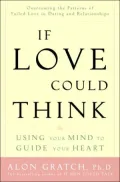
A groundbreaking book about why the one thing we all fear—ambivalence—is the one thing we must accept to find lasting love.If Love Could Think is an entertaining and practical book that addresses with warmth and intelligence the age-old question relevant to any stage of a relationship: why does love go wrong, and what can we do to make it right?
After many years of treating patients with relationship problems, psychologist Alon Gratch has identified seven common patterns of failed love. These patterns include, for example, narcissistic love, when a person has so idealized the partner and the relationship that they can’t possibly continue to measure up; one-way love, when a person loves someone who doesn’t return that love; triangular love, when a third party, be it a mother, an affair, or a job is involved in the relationship; and forbidden love, the kind of relationship that is generally off-limits, such as when a teacher dates a student. In If Love Could Think, Gratch shows us that all of these patterns stem from one fundamental problem—our own ambivalence.
With his trademark combination of depth and humor, and using many individual stories as engaging examples, Gratch walks us through the ways we get stuck in these patterns. In each case we are looking for perfect or ideal love. Every pattern creates an obstacle so we don’t have to face our own ambivalence about the relationship or the other person. But humans aren’t perfect, so no matter how wonderful love can be, there is no such thing as pure love. Ambivalence implies the existence not only of love but also of anger, disapproval, or disappointment. As Dr. Gratch shows, there are really only two choices: accept ambivalence as part of any loving relationship, or continue to repeat the patterns of illusory love. Happily, using a simple yet powerful three-step approach, If Love Could Think helps readers to use their own minds to break these patterns of failed relationships and find real and lasting love.
From the Hardcover edition.
Editorials
Library Journal
Psychotherapist Gratch seems to like the number seven. In his previous book, If Men Could Talk, he identified seven typical negative behavior patterns of males. Here, he discusses seven typical negative behavior patterns of people in failed relationships, which he claims are all caused by the ambivalent nature of love, by the disparity between untenable fantasies of perfect love and the realities of actual relationships. Case histories drawn from Gratch's practice supply examples of patients who have been unable to find lasting love. After describing their problems, the author shows how their early love/hate relationships with their parents led to their adult problems. He then attempts to show how therapy, or "emotional strategic thinking," can help them integrate this childhood ambivalence into their adult lives. Finally, he hopes to help them realize that "the capacity for love depends not on the other person but on ourselves, because love is primarily about giving, not receiving." Freudian in approach and more complex than most self-help books, this work is recommended for academic and public libraries.-Ilse Heidmann, Washington State Lib., Olympia Copyright 2005 Reed Business Information.Book Details
Published
October 25, 2005
Publisher
Crown Publishing Group
Pages
256
ISBN
9780307338129