
Physiology - Human, Physiology, Pathology, Medical Education & Training, Anatomy, Science Reference - General & Miscellaneous, Medical Test Preparation & Review, Human Anatomy - General & Miscellaneous, Family & General Practice
Log in to track your reading progress.
Overview
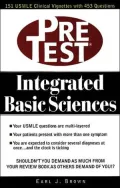
This new Pre-test title offers yet another tool for USMLE prep. This time, the basic science questions are integrated just as they are on the USMLE Step 1 exam. 151 clinical vignettes are also included and reinforced what's tested on the exam. All answers are referenced to the current literature for those wanting to expand their study.The book contains no figures.
Editorials
From The Critics
Reviewer: Dennis J Pillion, PhD(University of Alabama)Description: This book is a presentation of basic science questions similar to those found on the USMLE Step 1 examination. Clinical vignettes are presented in eight content areas. Medical students can answer the test questions and then review an explanation of the clinical vignettes in order to practice for the examination itself and to review the material presented in the first two years of medical school.
Purpose: The purpose is to provide second-year medical students with an integrated review of basic science information in preparation for the USMLE Step 1 examination. This is an important addition to material available to second-year medical students as they prepare for the examination. The examination has evolved over the past few years to include integrated questions based on clinical vignettes. The book is well designed and formatewd. The editor allows the student to achieve two objectives: practice test-taking skills and review material from different courses in an integrated fashion by considering a clinical vignette.
Audience: The book is designed to help second-year medical students prepare for the USMLE Step 1 examination. The editor also states that it can be used as an adjunct for medical students in their first, third, and fourth years of school as a means of integrating information obtained in specific courses, such as anatomy, biochemistry, pathology, etc. This book, in my judgment, is of greatest utility to second-year students who have completed all their course work prior to taking the Step 1 examination. The editor has been course director for the pathology course taught to second-year medical students at ETSU for ten years.
Features: Clinical vignettes (151 in all) are covered. This allows students to review a large number of topics. The edtior has developed a format in which three questions are asked in different areas per case. This also gives students practice at quickly evaluating a case then answering questions on topics related to the case. The editor provides a detailed explanation for each answer, allowing students to gain a review of each area while also practicing their test-taking skills. The subject areas of anatomy and pathology are particularly well covered. The shortcomings include no index of content material and very minimal coverage of physiology/pharmacology and microbiology. The book is brief and very readable, but no one text can begin to be comprehensive in covering all of the information needed to review for the Step 1 exam.
Assessment: Second-year medical students will find this a well-organized review of basic science material in a format that is specifically designed to assist students in preparing for the USMLE Step 1 exam. The material is presented in sections organized by systems, such as cardiovascular, hematology, etc., which allows students to integrate information presented in several different medical school courses such as anatomy, biochemistry, pathology, and physiology. The format is organized to allow students to practice taking an examination containing integrated questions based on 151 clinical vignettes. Students are then provided with a short review of the material covered in the questions and/or explanation of which responses were correct or incorrect. The book is easy to read and organized by topic, and students will find it useful as they prepare for the Step 1 exam. Since this exam has changed in the past few years, this book fills an important void and students will find it a valuable aid in organizing their review efforts.
Dennis J. Pillion
This book is a presentation of basic science questions similar to those found on the USMLE Step 1 examination. Clinical vignettes are presented in eight content areas. Medical students can answer the test questions and then review an explanation of the clinical vignettes in order to practice for the examination itself and to review the material presented in the first two years of medical school. The purpose is to provide second-year medical students with an integrated review of basic science information in preparation for the USMLE Step 1 examination. This is an important addition to material available to second-year medical students as they prepare for the examination. The examination has evolved over the past few years to include integrated questions based on clinical vignettes. The book is well designed and formatewd. The editor allows the student to achieve two objectives: practice test-taking skills and review material from different courses in an integrated fashion by considering a clinical vignette. The book is designed to help second-year medical students prepare for the USMLE Step 1 examination. The editor also states that it can be used as an adjunct for medical students in their first, third, and fourth years of school as a means of integrating information obtained in specific courses, such as anatomy, biochemistry, pathology, etc. This book, in my judgment, is of greatest utility to second-year students who have completed all their course work prior to taking the Step 1 examination. The editor has been course director for the pathology course taught to second-year medical students at ETSU for ten years. Clinical vignettes (151 in all) are covered. This allowsstudents to review a large number of topics. The edtior has developed a format in which three questions are asked in different areas per case. This also gives students practice at quickly evaluating a case then answering questions on topics related to the case. The editor provides a detailed explanation for each answer, allowing students to gain a review of each area while also practicing their test-taking skills. The subject areas of anatomy and pathology are particularly well covered. The shortcomings include no index of content material and very minimal coverage of physiology/pharmacology and microbiology. The book is brief and very readable, but no one text can begin to be comprehensive in covering all of the information needed to review for the Step 1 exam. Second-year medical students will find this a well-organized review of basic science material in a format that is specifically designed to assist students in preparing for the USMLE Step 1 exam. The material is presented in sections organized by systems, such as cardiovascular, hematology, etc., which allows students to integrate information presented in several different medical school courses such as anatomy, biochemistry, pathology, and physiology. The format is organized to allow students to practice taking an examination containing integrated questions based on 151 clinical vignettes. Students are then provided with a short review of the material covered in the questions and/or explanation of which responses were correct or incorrect. The book is easy to read and organized by topic, and students will find it useful as they prepare for the Step 1 exam. Since this exam has changed in the past few years, this book fills an important void and students will find it a valuable aid in organizing their review efforts.2 Stars from Doody
Book Details
Published
March 1, 1999
Publisher
McGraw-Hill Inc.,US
Pages
578
Format
Paperback
ISBN
9780070525511