
Genetics - Mapping & Engineering, Agricultural & Food Processing Machinery, Biology - Biotechnology, Agricultural Technology & Equipment
Log in to track your reading progress.
Overview
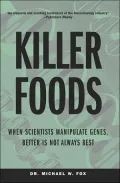
Laboratories around the world are experiencing a "bioexplosion," as they busily sequence, identify, and switch genes among different species. In Killer Foods, Dr. Michael Fox addresses the potential ramifications of this burst of technology. From the creation of herbicide-resistant soybeans to the splicing of human genes into pigs and goats, new developments in biotechnology pose serious questions: How has genetic engineering put animals' health at risk? What are the economic and biological consequences of a genetically altered future? Will this new technology mean the end of natural evolution?Without fostering "biotechnophobia," Fox investigates and discusses how a new world order - one based on genetic-engineering biotechnology - will affect the course of life on earth. From the state of agri-biotechnology (an estimated 60 percent of processed foods now contain genetically engineered ingredients), to concerns about genetic pollution and the loss of wildlife, to the disruption of ecological and evolutionary processes, Fox presents a full picture of the life science industry for public review.
Supported with documented research throughout and including a helpful resource list of organizations concerned with biotechnology, this comprehensive book provides a critical, in-depth look at modern science's most controversial frontier.
Editorials
Publishers Weekly -
From bioethicist (Eating with Conscience) and animal-rights activist Fox comes an eloquent and scathing indictment of the biotechnology industry that could trigger a national debate. Whereas biotech's supporters welcome pigs bioengineered to produce human hemoglobin, transgenic plants that secrete their own insecticides and "supercrops" that presumably will feed the world's hungry, Fox views the creation of these transgenic animals and plants (made by inserting a gene from a dissimilar organism) as fundamentally unethical, as well as unnecessary. An advocate of traditional husbandry practices and sustainable organic farming, he argues that biotechnology--coupled with industrial, chemical-based agriculture--will only accelerate the adverse environmental and consumer-health consequences of factory farming. He also contends that agribiotechnology is a nail in the coffin of Third World and indigenous peoples, as multinational companies use patents on genetically engineered organisms to gain monopolistic control of the world's markets for food and medicine, turning farmers into contract growers under the yoke of corporate feudalism. About 60% of the processed foods we now eat--corn, potatoes, salmon, soy, tomatoes, etc.--contain some genetically engineered ingredients. Blasting the FDA for its failure to implement labeling requirements, Fox warns that "genetic pollution" is inevitable as bioengineered crops, bacteria, fish and other organisms spread their anomalous transgenes into Earth's life-stream, with utterly unknown consequences for human health and a very real potential for cross-contamination of conventional crops. Pointing to the Clinton White House's ties with the agribiotechnology industry, Fox calls for widespread public involvement in the decision-making process of how this new technology is applied, and he sets forth bioethical criteria, including safety, environmental and animal welfare considerations. Fox's succinct book is the most cogent and persuasive to date on a global issue that, if he is right, has already reached nightmarish proportions. (Sept.) Copyright 1999 Cahners Business Information.Booknews
The well-known veterinarian/bioethicist who spearheaded the US ethical treatment of animals movement discusses the biological, economic, and moral ramifications of what he calls "genetic imperialism." Includes a biotechnology glossary and resources for consumer monitoring. Annotation c. Book News, Inc., Portland, OR (booknews.com)Kirkus Reviews
A continuation of the author's previous work in Superpigs and Wondercorn (1992), exploring the disturbing ramifications of recent developments in animal cloning, patentable life forms, and genetically engineered crops. Fox, a bioethicist and veterinarian, presents powerful cautions against the widespread use of genetically engineered plants and animals. In the case of engineered plants, Fox argues that we know far too little about how they may adversely affect the ecosystem. Over time, they may destroy beneficial insects or, conversely, transfer their herbicide resistance to harmful weeds. The scope of experimentation is staggering, including crops that produce their own pesticide, virus-resistant strains, and even plants that include a "terminator" gene—these crops produce sterile seeds, ensuring that the farmer must purchase seeds from the manufacturer for every planting. More unusual and bizarre still are the animal experiments. Many new animal species are transgenic, meaning that they contain genes from other species spliced into their DNA. Some pigs, for example, contain human genes, the better to provide donor cells. Cows can be bioengineered so that they produce drugs in their milk. One project is even working on a self-shearing sheep. The problem with these manipulations begins with the techniques used to transfer the genetic material, which often involves pieces of viruses. Dolly aside, cloning of animals is a technology still in its infancy, plagued with many problems and unanswered questions. Throughout this volume, Fox asks these tough questions: do we have the right to do what we are doing, and do we know the long-term consequences of our actions? Although heoccaisionally hints at a larger conspiracy at work, it's enough of an explanation to recognize the self-serving nature of most large conglomerates. Fox offers a disturbing exploration of the explosion in genetic research, occurring with insufficient safeguards and a lack of ethical consideration.Book Details
Published
March 1, 2005
Publisher
Guilford, Conn. : Lyons Press, 2004.
Pages
304
Format
Paperback
ISBN
9781592284474