
Fiction - Historical Fiction, Fiction - Native Americans, Fiction - Health & Medicine
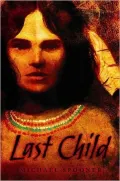
Available on Bookshop
Write a review
Books.org participates in affiliate programs including Bookshop.org and the Amazon Services LLC Associates Program. We may earn a commission from qualifying purchases made through links on this page, at no additional cost to you.
Log in to track your reading progress.
Overview
A mixed-race girl must grow up quickly when danger threatens her world
Rosalie’s biggest problem used to be her own divided feelings. The constant tug-of-war between her white half and her Native American half is hard. She even has two names: Rosalie when she’s at the fort with her father and Last Child when she’s in the village with her mother.
But now a steamboat has carried smallpox into Rosalie’s world—and the Mandans have no resistance to the disease. Suddenly the name Last Child is all too real.
Set during the smallpox epidemic of 1837, this is the powerful story of a mixed-race girl fighting her way into adulthood against all odds.
Editorials
VOYA
Set in the upper Missouri valley during the smallpox epidemic of 1837, this fast-paced adventure takes readers into the mind and heart of pre-adolescent Rosalie, aka "Last Child," who splits her life between her mothers' Mandan village and her white father's Fort Clark. As the novel opens, bookkeeper McCullough, outraged at the arrival of a boatload of sick whites lying among soiled Indian blankets, orders the blankets burned and the sailors quarantined. But his orders are ignored. As disease spreads, McCullough, taking two men and daughter Rosalie as clerk, leaves the fort to rescue a trader and his load of buffalo robes lost upriver. There they are ambushed and Rosalie kidnapped. Against all odds, Rosalie escapes, survives a forest fire, builds a buffalo-hide boat, saves the trader, and returns to a devastated village. Now almost literally "Last Child," she spends precious weeks with her failing Mandan grandmother who teaches Rosalie to accept herself and to straddle two cultures. The novel ends with an 1845 epilogue as Rosalie, after years away in her father's care, returns home to chronicle the tragedy. Action-packed prose; sharp, witty dialogue; and strong characterization make this novel an entertaining read. Spooner, himself related to Native Americans, does his best to accurately portray the time and the people. This book is wonderfully suited to examining issues of cultural conflict and mixed-race youth. VOYA CODES: 4Q 4P M J S (Better than most, marred only by occasional lapses; Broad general YA appeal; Middle School, defined as grades 6 to 8; Junior High, defined as grades 7 to 9; Senior High, defined as grades 10 to 12). 2005, Henry Holt, 256p., Ages 11 to 18.—Laura Woodruff
Children's Literature
Rosalie moves between two worlds. She spends half of her time at the fort with her white father and the other half at the village with her mother and the rest of her family, where her name is "Last Child." She prefers to think of herself as white, even though it causes problems with the people in the village. When a steamboat captain brings smallpox to the village, though, Rosalie's world will be forever changed. Kidnapped by a crazy white man and one of her own people, Rosalie must use all her resources to escape. Once she returns home, though, she finds that her challenges are just beginning. No longer a child, Rosalie must decide what type of person she wants to be. Rosalie's story alternates with journal entries from her father—a rather interesting storytelling tool. This accurate portrayal of the effect that smallpox had on Native Americans is very powerful. Rosalie's inner conflict about her own race is a problem many modern children face, and makes the story particularly relevant in today's world. 2005, Henry Holt and Company, Ages 10 up.—Amie Rose Rotruck
School Library Journal
Gr 6-9-It is 1837, and Rosalie (also known as Last Child) isn't sure who she is. Her father is a white bookkeeper inside Fort Clark (ND), while her mother lives in the nearby Mandan village. Rosalie calls both places home, yet belongs in neither. The Mandans war frequently with the Dakotas, making life uncertain. Then she is taken captive by a deranged steamboat captain whose boat brought smallpox to the area and must rely on her wits and Native skills to return home, where her father has turned to drink and her mother is dying. With the help of her grandmother, Muskat Woman, Rosalie must determine her identity and her future. Spooner has written a compelling story, historically accurate with a vivid setting, and yet colored with sparkling characters. Though the start is a little sluggish, and the ending is somewhat melodramatic and contrived, many readers will identify with Rosalie's struggle for acceptance and belonging.-Melissa Moore, Union University Library, Jackson, TN Copyright 2005 Reed Business Information.Kirkus Reviews
In the midst of wars and rumors of wars, pestilence and fire, young Rosalie must grow up quickly. The smallpox epidemic of 1837 has killed most of her Mandan village near Fort Clark, and if she survives at all, she fears it'll be as a society of one. Rosalie, the youngest in her family, has always been called Last Child, but now she may literally become that. Spooner uses alternating first-person voices-Rosalie's and her white father's-to vividly portray the lives of those caught in what seemed like the end of the world. Rosalie-part white, part Mandan-must navigate between both cultures, always feeling neither one nor the other, but she comes to realize she is the one who can document what has happened and appeal for aid for the survivors, only 150 of 2,000 villagers. The horrific effects of the "white man's disease" are effectively shown, and Rosalie's character and world are fully realized. A fine historical novel bringing an important chapter in American history to life for young readers. (timeline, notes on American history, bibliography, glossary, personal note) (Fiction. 11+)Book Details
Published
October 1, 2005
Publisher
Henry Holt and Co. (BYR)
Pages
240
ISBN
9781429937092