
Peoples & Cultures Biography, United States - Civil Rights Movement - History, African American - Biography - General, Biography - General & Miscellaneous, African American Civil Rights Leaders - Biography
Log in to track your reading progress.
Overview
While growing up in Jamaica, Marcus Garvey decided he and other black people had to take charge of their own lives before conditions would improve. After founding the Universal Negro Improvement Association (UNIA), he moved to New York where he worked toward organizing African descendants from all over the world. UNIA encouraged racial pride and financial independence, as well as the establishment of a homeland in Africa. To help reach these goals, Garvey raised money to launch a shipping company and other ventures. His lack of experience crippled these efforts, however. The businesses were soon bankrupt and Garvey was arrested and convicted of mail fraud. After serving a short prison sentence, he was deported from the United States and his organization fell apart. Although he was not successful in his immediate goals, Marcus Garvey was an early advocate of ethnic pride and of black nationalism and had a powerful impact on the civil rights movement in the United States.Profiles Marcus Garvey, a self-educated black man who worked to end world-wide discrimination against Africans, to help black Africans regain control of their countries, and to promote black pride, unity, and power.
Editorials
Children's Literature
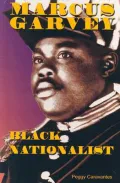
Marcus (born Mosiah) Garvey is a very controversial figure in the Black Nationalist movement. He was born in Jamaica in 1887 to parents who were descendants of the Maroons, African slaves who rebelled against the Spanish and British colonizers of Jamaica. Although when he was young, Mosiah played with both black and white children, he soon learned, as he grew older, that color separated him from some of his former friends. At fifteen, he left school, moved to Kingston, and changed his name to Marcus. He became a champion of working people and a strong advocate of organized labor. His travels took him to London, Central America, and the United States. After serving a prison term in the United States on charges of mail fraud, he returned to Jamaica. Throughout his life, he fought for Black Nationalism, believing that all black people should return to their native Africa. The story is told in a compassionate way, with photos as illustrations. At the end of the book is a timeline, a list of sources for each chapter, a bibliography (including websites), and a good index. This book would be very useful for middle and high school students doing historical or biographical research. 2004, Morgan Reynolds Publishing, Ages 10 to 18.— Kathy Egner, Ph.D.
VOYA
Malchus Mosiah Garvey, the eleventh child of an antisocial Jamaican stonemason, never knew prejudice until he was fourteen years old, when his white playmate told him that their friendship was over because he was black. At fifteen Garvey quit school, changed his name to Marcus, and became a printer's apprentice. He read extensively, trained himself in public speaking, and became active in the printers' union, leading an unsuccessful strike in 1907. What followed was a life of activism in several countries to secure decent lives for the black people of the world. Garvey called for a return to the African homeland. He praised the beauty of black features and taught black pride. In the United States, he founded the Universal Negro Improvement Association (UNIA) and worked to make American blacks financially independent. His personal and public lives, however, were plagued with scandal, fiscal irresponsibility, and astounding blunders, resulting in imprisonments and exiles. Impoverished and disillusioned, he died at age fifty-two in London. Garvey's message of African nationalism, racial pride, and economic independence nevertheless reached more than a million followers and created the first mass movement among blacks. His disciple Earl Little was the father of militant U.S. civil rights leader Malcolm X, and black leaders around the world continue to voice Garvey's ideas, some of which are included in the United Nations Declaration of Human Rights. Attractively illustrated, this unbiased, well-written, "skinny" book gives important information for young readers at middle and high school levels. VOYA Codes 4Q 4P M J S (Better than most, marred only by occasional lapses; Broad general YAappeal; Middle School, defined as grades 6 to 8; Junior High, defined as grades 7 to 9; Senior High, defined as grades 10 to 12). 2004, Morgan Reynolds, 128p.; Index. Photos. Maps. Biblio. Source Notes. Chronology., PLB Ages 11 to 18.—Laura Woodruff
School Library Journal
Gr 6-9-Garvey, self-taught and driven, was a controversial, if not outright explosive, character who kept a high profile (even in prison) as an advocate for Black Nationalism. A Jamaican born in 1887, he was confronted with prejudice as a teen learning the printing trade. In 1910, in response to a union strike in which blacks were peripheral, Garvey started the first of a lifelong series of failed newspapers advocating political action. His flamboyant charge through life was filled with romance; intrigue; organizational and marital discord, including a strange association with the KKK; repeated failures at building black shipping companies and news ventures; the donning of a Napoleon-like uniform; imprisonment for mail fraud; and passionate championing of black people and the establishment of a black homeland. Careful to balance the extremes of her subject's life, Caravantes finds herself enmeshed at times in vignettes that are well documented, yet somehow overly detailed, and the book becomes a rambunctious, sometimes confusing, roller-coaster ride through the life of a famous (or infamous) figure. The chronology helps readers sort through the incredible ups and downs, and the references are helpful. Students will probably emerge somewhat bewildered: the man was an enigma and that fact about him, if nothing else, is crystal clear.-Mary R. Hofmann, Rivera Middle School, Merced, CA Copyright 2003 Reed Business Information.Book Details
Published
July 1, 2003
Publisher
Greensboro, N.C. : Morgan Reynolds Pub., c2004.
Pages
128
Format
Hardcover
ISBN
9781931798143