
Biology
Available on Bookshop
Write a review
Books.org participates in affiliate programs including Bookshop.org and the Amazon Services LLC Associates Program. We may earn a commission from qualifying purchases made through links on this page, at no additional cost to you.
Log in to track your reading progress.
Editorials
Children's Literature -
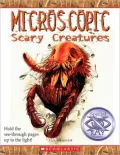
Part of the "Scary Creatures" series about nature and animals, this title examines tiny creatures like protozoa, ticks, and mites. The text, in a large font with lots of "Did you know?" sidebars, addresses what microscopic creatures are, how they live, eat and get around, why their bites itch so much, whether they are dangerous or beneficial, and more. Terms like "host" are highlighted in bold; there is a glossary at the end, along with a list of facts and an index. The inclusion of suggested readings and web sites would have been helpful, however. The attractive format features large color photographs and lots of detailed drawings with labeled cutaway views. A few full-page illustrations offer "special X-ray vision": when a close-up illustration of skin is held up to a light, for example, the scabies mites populating it (featured on the other side of the page) show through. Young scientists will appreciate the exciting cover, with the image of a strange-looking creature bursting through the page, and the emphasis on conveying information visually, as well as the inclusion of such juicy details as how much blood fleas can suck in a day. For schools and public libraries. Reviewer: Paula RohrlickSchool Library Journal
Gr 3–5—These titles have two-page chapters of accessible, large-type text and bright color photos and illustrations. Hippos answers such questions as, "Were There Ancient Hippos?" and "Do Hippos Have Enemies?" The second title discusses how "biters find their victims" and whether microscopic creatures are good for us. Pinnipeds describes how walruses and seals swim, and their predators. Swarms asserts that the Madagascar hissing cockroach is a "great pet." The series distinguishes itself with "X-Ray Vision." When readers hold the page with this prompt up to the light, an image emerges. The X-rays mostly show the skeletal structures of the animals. Text boxes throughout add to the visual appeal. Readers could easily flip through these titles and glean important facts, including how human beings affect the animals and their habitats. Pictures of the creatures feeding on or being fed to another animal are included. The subject is handled matter-of-factly. In Hippos, Clarke says about a baby hippo, "But its death is not a waste, because its body provides food for other creatures." These titles are excellent resources for school assignments and browsing.—Lori A. Guenthner, Baltimore County Public Library, Randallstown, MDBook Details
Published
September 1, 2009
Publisher
Scholastic Library Publishing
Pages
32
Format
Library Binding
ISBN
9780531216736