
Outer Space - Observation & Exploration, Astronautical Engineering - Space Stations & Satellites, Astronautical Engineering - General & Miscellaneous, 20th Century American History - Space Program, Astronauts & Space Flight, Astronomy, The Solar System -
Log in to track your reading progress.
Overview
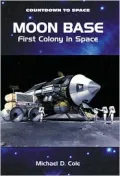
This reluctant-reader book opens with an account of the Apollo 11 mission to the Moon. It has been thirty years since we first stepped on the Moon and it may be time to return. Michael D. Cole clearly explains the need for establishing a Moon base and how it will be built. He describes how astronauts will live there and presents the plans for this future space mission. NASA illustrations give the reader a clear idea of what the base will look like. This high-interest title provides accounts of what work will be done there, how we will get there, and most importantly, how we will survive on the Moon.Describes the Apollo 11 mission to the moon, explains the need for establishing a moon base, and speculates about future situations in which the base would be used.
Editorials
School Library Journal
Gr 4-6-These utilitarian volumes may not ignite that sense of wonder that flashier surveys of space and space exploration do, but both offer solid groundings in their respective topics. Cole reports on the unmanned Galileo's wildly indirect course past Venus, the Moon, Earth (twice), through the asteroid belt, and into the Jovian system, pausing for thumbnail profiles of several scientists who worked on the mission and capturing a strong sense of their triumph at its successes. The scenario for our planned Moon base makes drier reading, largely because it is so abstract (e.g., "During the two-week lunar day, the crew will take turns exploring the area in two-person teams. The first two astronauts will slide into their space suits and venture outside through the habitat's airlock"), but the base's initial construction and purposes are clearly laid out. In both books, small, sharp color illustrations-mostly photos in Galileo, mostly artists' renderings in Moon Base-enhance the narrative, and in both the perfunctory indexes (major topics, such as the detailed account of the Moon base's solar power array, are missed) are balanced by full endnote citations, as well as lists of books and Web sites. Any collection serving assignment-driven readers will benefit from these up-to-date introductions.-John Peters, New York Public Library Copyright 1999 Cahners Business Information.Book Details
Published
February 1, 1999
Publisher
Enslow Publishers
Pages
48
Format
Binding
ISBN
9780766011182