
Americans - Regional Biography
Available on Bookshop
Write a review
Books.org participates in affiliate programs including Bookshop.org and the Amazon Services LLC Associates Program. We may earn a commission from qualifying purchases made through links on this page, at no additional cost to you.
Log in to track your reading progress.
Overview
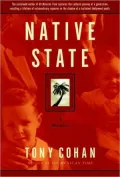
A captivating, deeply affecting memoir chronicling a journey from a Hollywood childhood as the son of a fading show business figure to a bohemian life in Europe and back to his native state of California, where the author must face the man who had driven him away.Summoned from abroad to attend to the ninety-four-year-old father he’s never been close to, writer and musician Tony Cohan finds himself reliving his own peripatetic life—a kaleidoscopic odyssey from California’s sunny postwar promise through the burnt end of the 1960s to the final days of the last century.
An engrossing investigation of memory and identity, love and desire, art and fate, Native State vividly portrays the author’s attempts to escape the confines of a celebrity-filled, alcoholic family through music, writing, and travel. His descent into the colorful milieus of musical and literary geniuses and lowlifes, divas and crooks, fortune tellers and culture gods in Paris, Tangier, London, Copenhagen, Barcelona, San Francisco, Kyoto, and Los Angeles coalesces into a distinctive, intimate depiction of a pivotal cultural era. Throughout, Cohan brilliantly interweaves and contrasts his past experiences with his present-day reflections on the universal youthful desire to flee home and family, and the simultaneous “undertow of origins” urging a return. The result is a work that combines unusually rich storytelling with extraordinary literary quality.
Poignant, elegantly crafted, and often funny, Native State is an indelible portrait of the artist as a young man, and—as son and dying father grope toward acceptance—a coming-to-terms with self, family, origins, and the elusive American idea of home.
Editorials
Publishers Weekly
Cohan (On Mexican Time) was about to begin another travel book when he got word that his 94-year-old father was in his "ninth inning." Reluctantly, Cohan went to California for the death vigil. He'd never particularly liked his father, Phil, who at his career height had produced and directed the Jimmy Durante Show for CBS Radio, and who had monopolized the family spotlight relentlessly. Poring over the family scrapbooks, his dad's "memory palace," Tony relived his California boyhood, remembering his first drums, his first girlfriend, his mother's alcoholic binges, his father's interminable name-dropping and self-aggrandizing, and his own escape, after college, to Europe in the early 1960s. A bebop and cool jazz drummer, young Cohan played with some of the great expatriate musicians, including Dexter Gordon and Bud Powell. He knew Paul Bowles in Tangiers, met William Burroughs in Paris and took a lot of drugs. Returning to California, he soon took off for a Zen-inspired stint in Japan, but made it back to the States in time to get into the Ravi Shankar-inspired Indian music craze, the Big Sur scene, the Haight's "summer of love" and even some sessions with Jim Morrison. Cohan intercuts his own story, chapter by chapter, with updates on his father, who's finally "entering a state of grace." Filled with "improbable affection" for the dying man, Cohan finds "the less of him there is, the easier it is to like him." While Cohan's disarmingly honest life story would be colorful enough on its own, his memoir is enriched by his setting it against the story of his coming to terms with his father. Agent, Bonnie Nadell. (Sept. 9) Forecast: With the popularity of Cohan's last book and the publicity planned for this one-author tour, advertising and BEA promotion-this could be a breakthrough book for the author. It should appeal to both men and women, an unusual trait for a memoir. Copyright 2003 Reed Business Information.Library Journal
Cohan, whose On Mexican Time discussed events later in his life, tackles his young adulthood in this eighth book. His recollections are framed by the slow demise of his father, a producer of radio specials before television came along. As a youngster, at odds with his has-been dad and alcoholic mother, Cohan took up drumming as a means of escape. This served him well throughout his school years and post-college time spent traveling overseas. Some time afterward, he decided that writing was a better means of expression for him than his drums. Here, Cohan uses this now-developed skill to describe all the show biz people, writers, and jazz musicians he encountered; all the drug deals gone bad; the various musical influences that defined him; and the various places where he spent time: Paris, Tangier, London, Copenhagen, Barcelona, San Francisco, Kyoto, and Los Angeles. Unfortunately, the result is a self-involved memoir full of name dropping. Appropriate for public libraries and those with a cursory interest in the European jazz scene in the early Sixties.-Gina Kaiser, Univ. of the Sciences, Philadelphia Copyright 2003 Reed Business Information.Kirkus Reviews
Snapshots of old Hollywood and visions of beatnik Europe are interleaved in a memoir that explores the relationship between father and son. Cohan (On Mexican Time, 2000, etc.) introduces us to his childhood with a recollection of one of his family's earliest outings: standing in a parking lot overlooking Los Angeles, he holds his father's hand as they search for Cohan's mother, who turns out to be sprawled in a ditch, drunk. Yet it's Dad who comes in for the lion's share of censure in this examination of what it took for Cohan to grow up and away from a stifling home life. Father Cohan, a one-time big-shot radio producer, was never able to come to terms with his fall from showbiz heights and spent the rest of his life in a struggle to convince himself and others (particularly his son) that his star hadn't dimmed. Meanwhile, the author's mother first drank and then became rigidly sober, never at ease in the household. In the face of it all, Cohan turned to music, getting more and more adept at drumming until finally, in a post-collegiate year in Europe, he crossed paths with the jazz greats, backing Bud Powell and Dexter Gordon. In between these glorious moments, however, Cohan's early manhood consisted of poverty, small-time drug-smuggling, a failed marriage, and bewilderment. These recollections are interspersed with scenes of his father's bluster, failing health, and eventual death. While Cohan's prose can be engaging, much of the text is murky, slow, or just plain confusing. Sometimes vivid, sometimes flaccid: at its best when conveying the unsettled feel of the birth of the '60s. Agent: Bonnie Nadell/Frederick Hill Bonnie Nadell AgencyBook Details
Published
October 14, 2003
Publisher
Crown Publishing Group
Pages
368
ISBN
9780767910224