
General & Miscellaneous Islam
Available on Bookshop
Write a review
Books.org participates in affiliate programs including Bookshop.org and the Amazon Services LLC Associates Program. We may earn a commission from qualifying purchases made through links on this page, at no additional cost to you.
Log in to track your reading progress.
Overview
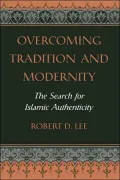
“Authenticity” has begun to rival “development” as a key to understanding the political aspirations of the Islamic world. Almost everywhere modernity has laid waste to tradition, those habits and practices deemed to be timeless and true. Imperialism carried European notions of progress into Muslim-dominated parts of the globe, and subsequently Muslims themselves espoused Western practices, techniques, and philosophies. Regimes calling themselves liberal, socialist, and Arab nationalist all embraced modernity as their principal objective.Most of these regimes failed to create the promised better lives their citizens desired. Moreover, ordinary Muslims felt despair as modernity ripped apart families, exposed youngsters to the materialism and hedonism of Western entertainments, heightened social expectations, and undermined religious belief. Even though tradition has proved itself incapable of staving off modernity, the promises and premises of modern development literature have been called into question.Where is the truth to which Muslims can rally? Does modernity require a rejection of tradition? Does the embrace of Islamic ideas necessitate turning away from modernity? Robert D. Lee explores these compelling questions by presenting four contemporary Muslim writers—Muhammad Iqbal, Sayyid Qutb, ‘Ali Shari‘ati, and Mohammed Arkoun—all of whom have refused to bow to such a dichotomy of modernity and tradition. This study examines their efforts, deeply influenced by European thinking, to find a truth beyond tradition and modernity—an “authentic” understanding of Islam upon which Muslims can build a future.All four thinkers believe such an authentic understanding can serve as the foundation for a new politics. Lee argues, however, that each of theseversions of authenticity suffers shortcomings and falters in its efforts to move from the particularity of culture onto a grander scale of political organization appropriate for the modern world.Synopsis
This book examines the efforts of four Muslim thinkers of the twentieth century—Muhammad Iqbal, Sayyid Qutb, ‘Ali Shari‘ati, and Mohammed Arkoun—to overcome the apparent dichotomy of tradition and modernity in fashioning a new political and cultural truth. Robert D. Lee illuminates the European-influenced work of these thinkers to demonstrate both the appeal of “authenticity” as a rallying cry and the difficulty of building a new politics on such an idea.
Book Details
Published
August 1, 1997
Publisher
Westview Press
Pages
228
Format
Paperback
ISBN
9780813327983