
Writing, Language Arts - English Language, Teen Literary Criticism, Teen Poetry, Poetry - General & Miscellaneous
Log in to track your reading progress.
Overview
Reading and writing poetry as a class assignment can be a rewarding experience--especially when it's approached in a spirit of fun. This book explains how poets use words imaginatively in rhymed and metered verse as well as free verse. Poems can be humorous or serious, long or very short, joyful or sad--and this instructive, yet fun-to-read book points the way toward composing and reading poems of all kinds. It's filled with examples from Homer through today. All titles in Barron's Painless Series are written especially for classroom use for middle-school students.
Synopsis
Kids who are convinced that they hate poetry or think it's dull and difficult, are likely to change their opinions when they open this book. Using examples that range from exciting, well-told stories that grip the imagination to song lyrics and slam poetry, the author shows that there is more to poetry than many imagine.This revised and updated edition guides middle school and high school students through poetry created for many purposes and written in many forms, and offers insights, guidelines, and techniques to enable students to read and evaluate poems, as well as to write original poetry.
Titles in Barron's Painless series cover a wide range of subjects taught in middle school and high school, presenting each subject in a student-friendly format, and demonstrating that learning can be exciting and mind-expanding.
Editorials
KLIATT
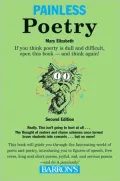
As one who takes his poetry seriously, I had only the most modest expectations for this book with the frightened cartoon cat and bee illustrations on its bright-yellow covers and crudely punning chapter heads within. Imagine my surprise, then, when this easy-to-read and remarkably thorough volume turned out to be one of the best introductions to the reading and writing of poetry that I've ever encountered. The author starts with no presumptions of prior knowledge on the reader's part and proceeds to explore in great detail exactly what a poem is and is not. Each of her five well-organized chapters includes brain ticklers that invite readers to test their understanding of the ideas presented in the chapter as well as to write original poems of their own. There are more poetic devices described on these pages than any young reader—indeed, any professional poet—might ever need to know, but they are invariably presented with ample poetic examples that render them both interesting and easy to understand. (Did everyone but me already know that "paraprosdokian" is a surprise ending, "epizeuxis" is the repetition of a word for emphasis, or that "paronomasia" is punning?) The author leaves no stone unturned in exploring every aspect of the poetic art, and she makes generous use of some of the greatest poetry in the English language to illustrate her lessons. This fine volume is highly recommended for readers of all ages and deserves a prominent place on every library shelf . KLIATT Codes: JSA*—Exceptional book, recommended for junior and senior high school students, advanced students, and adults. 2001, Barron's, 326p. illus. index., $8.95. Ages 13 to adult. Reviewer:Jeffrey Cooper; Writer/ Editor, Long Island, NY , November 2001 (Vol. 35, No. 6)Book Details
Published
June 1, 2011
Publisher
Barron's Educational Series, Incorporated
Pages
368
Format
Paperback
ISBN
9780764145919