
Fiction, World Literature, Fiction Subjects
Available on Bookshop
Write a review
Books.org participates in affiliate programs including Bookshop.org and the Amazon Services LLC Associates Program. We may earn a commission from qualifying purchases made through links on this page, at no additional cost to you.
Log in to track your reading progress.
Overview
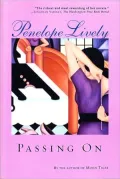
Booker-Prize winning author Penelope Lively is that rare writer who goes from strength to strength in book after perfectly assured book. In Passing On, she applies her distinctive insight and consummate artistry to the subtle story of a domineering and manipulative mother's legacy to her children. With their mother's death, Helen and Edward, both middle-aged and both unmarried, are left to face the ramifications of their mother's hold on their lives for all of these years. Helen and Edward slowly learn to accept what has been lost in their own lives and embrace what can yet be retrieved. "The richest and most rewarding of her novels." - The Washington Post Book WorldA brilliant new novel from Booker Prize-winning author Penelope Lively, Passing On opens with the death of a difficult mother and follows the lives of her middle-aged children as they slowly learn to face what has been lost in their own lives and embrace what can yet be retrieved.
Editorials
Publishers Weekly -
Greystones is a moldy, drafty house of no great distinction located in the equally nondescript English town of Spaxton. The domineering and cantankerous Dorothy Glover has finally passed away, leaving her middle-aged progeny, Helen and Edward, to examine their lives, both past and future. It's a subtle plot and one that does well with Lively's ( The Road to Lichfield ) gently assured style. By revealing developments through small details--the discarded dishrags that mark the beginning of a relationship and the glimpse of a watch that signals its end--she delicately delineates the impact of love, scandal and turmoil. On the rare occasion when Lively gives reign to sweeping statements, as when the dramatic Louise comments on motherhood (``At the moments you wish you were shot of the whole thing you know perfectly well that it's precisely because you couldn't endure to be without it, now you know about it, that you've got to go through all this''), her writing doesn't quite ring true. But such instances are rare in this consistently engrossing tale. (Feb.)Library Journal
Having won both the Booker Prize (Moon Tiger, LJ 5/15/88) and the Carnegie Medal (The Ghost of Thomas Kempe, 1973), Lively has already proven herself to be one of Britain's finest authors. Passing On simply burnishes this reputation. Once again, she develops her favorite theme: the power of the past to control the present. In this case, the past is a malevolent mother who is being lowered into her grave at the beginning of the book. But if Helen and Edward, middle-aged brother and sister, think that their mother has lost her stranglehold on them by dying, they are wrong. Through Helen's intelligent perception we watch as she and Edward struggle valiantly to lead normal lives. Sheila Mitchell, a respected actress in British theater, television, and radio, reads the story with accomplished skill. As Mitchell lowers her voice slightly to become Edward or speaks softly as Helen, listeners will swear they are sitting with them at the kitchen table in that tomb of a house. In fact, the reading is so convincing that it seems almost like an invasion of privacy to be listening at all. Highly recommended.-Jo Carr, Sarasota, Fla.Book Details
Published
December 1, 2007
Publisher
Grove/Atlantic, Inc.
Pages
224
ISBN
9780802197344