
Fiction, World Literature, Fiction Subjects
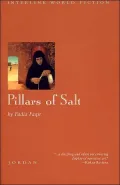
Available on Bookshop
Write a review
Books.org participates in affiliate programs including Bookshop.org and the Amazon Services LLC Associates Program. We may earn a commission from qualifying purchases made through links on this page, at no additional cost to you.
Log in to track your reading progress.
Editorials
Sunday Times (London)
This is a powerful and distinctive piece of writing, melding the recent history of the country with the continuing personal and political oppression of Arab women.Publishers Weekly -
The Jordanian-born Faqir (Nisanit), who writes in English, brings both the declamatory style and the intricate syntax of traditional Arabic storytelling to a novel of anti-traditional feminist themes. There are three narratives. The first is told by an itinerant male Storyteller, who has a monkey and a profane voice: "Men say Allah turned my friend the man, Maymoon, into a monkey when he wiped his ass with a piece of bread." This Storyteller spins tales that contradict those of the primary narrator, Maha, a peasant woman, who tells both her own tale and that of Um Saad, a more sophisticated woman from Amman. The two women are roommates in a mental hospital around the time of the British Mandate. Um Saad is a heartbroken mother of eight whose husband has replaced her with "the woman in green who licked the side of her mouth like a snake." It's sad, but it doesn't have half the drama of Maha's story, which concerns her love for her husband, now dead, whose "firm thighs told the story of endless days of riding strong Arab horses." Basically, the Um Saad and Storyteller chapters get in the way of the real drama: What's going to happen to Maha next? Will her husband rise from the dead? Will her brother punch her in the head (again)? Will she be forced to marry old Sheikh Talib? The novel's mix of Arabian Nights fabulism and social concernregarding the repression of Arab womenis sometimes awkward. But Faqir is a skilled writer striving for an ambitious synthesis of Arabic and English style, Islamic and Western sensibility. She doesn't fully succeed, but it's entertaining to watch her try. (May)Kirkus Reviews
Pillars Of Salt ( paper May 9, 1997; 256 pp.; 1-56656-220-1; paper 1-56656-253-8): This skillfully constructed novel, the second from an acclaimed Jordanian writer, portrays the vulnerability of women in an embattled traditional culture through the stories exchanged by two patients in a mental hospital. One has obediently surrendered to her husband's choice of a younger wife, the other has seen her marriage fall victim to political violence. The histories of Maha and Um Saad, which typify Jordanian experience during the British Mandate that lasted through much of the 1940s, are framed and echoed by the comments of "The Storyteller," who relates them to us in a dazzling and often very moving display of narrative art.Book Details
Published
October 1, 1996
Publisher
Interlink Publishing Group, Incorporated
Pages
230
Format
Paperback
ISBN
9781566562539