
Children's Non-Fiction, Art
Available on Bookshop
Write a review
Books.org participates in affiliate programs including Bookshop.org and the Amazon Services LLC Associates Program. We may earn a commission from qualifying purchases made through links on this page, at no additional cost to you.
Log in to track your reading progress.
Overview
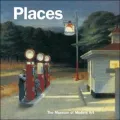
These bright, compact hardcovers introduce young readers and their parents to six visual building blocks—Lines, Shapes, Colors, People, Places and Stories—via an assortment of the great masterpieces of twentieth century art. Author Philip Yenawine, the longtime Director of Education at The Museum of Modern Art, is currently co-director of Visual Understanding in Education, a developmentally based education research organization. He has also been affiliated with education programs at the Metropolitan Museum of Art and the Museum of Contemporary Art, Chicago. In Shapes Yenawine asks questions like, "Can you find buildings? And roofs?" while looking at a Picasso study. Other Shapes artists include Seurat, Gauguin, Malevich, Mondrian, Arp, Klee, Smith and Dali. Colors looks at Monet, de Kooning, Kandinsky, Albers, Stella and Johns, among others. Places includes 21 artworks by artists such as Hopper, Munch, Klimt, and Bonnard, while People highlights works by Balthus, Degas, Freud, Cezanne, Neel and Rivera. Lines features 16 works by van Gogh, Matisse, Pollock, Morandi, O'Keeffe and others. And Stories includes Chagall, Wyeth, Lichtenstein, Dubuffet, Shahn, Moore and Magritte. Each volume comes with an illustrated summary of artworks.Examines, in simple terms, the nature of imaginary and realistic places created by such modern artists as Hopper, Munch, and Shahn.
Editorials
School Library Journal
K-Gr 3-These books offer 22 full-color reproductions (one per page, plus one on each jacket) with minimal texts that ask inane questions, such as ``What is going on in this picture?'' or ``Can you find flowers, clouds, rocks, and water?'' A wide range of artistic styles is represented-in People, from a Degas painting to a Rivera fresco to a Helen Levitt photograph; in Places, from a Lichtenstein pop-art painting to a turn-of-the-century photograph to a Hopper etching. Unfortunately, the books' small size often makes thoughtful inspection of the pictures impossible. The reproductions are all about the same size, ignoring the differences in scale among the originals and in many cases preventing readers from seeing textures and details. Included at the end of each title is factual information and a couple of sentences about each work to help adults extend discussions, e.g., ``Lichtenstein plays visual games with us. Count...the repetitions of the painting over the bed to consider what is `real' and what is `reflected.'" Although there is value in having youngsters become familiar with all sorts of pictures, they deserve more profound questions and answers about the aesthetic devices artists use to achieve their goals.-Kenneth Marantz, Art Education Department, Ohio State University, ColumbusBook Details
Published
June 12, 2026
Publisher
The Museum of Modern Art
Pages
24
Format
Hardcover
ISBN
9780870701733