
Civil & Structural Engineering, Civil & Structural Engineering, Scientists, Inventors, & Naturalists
Available on Bookshop
Write a review
Books.org participates in affiliate programs including Bookshop.org and the Amazon Services LLC Associates Program. We may earn a commission from qualifying purchases made through links on this page, at no additional cost to you.
Log in to track your reading progress.
Overview
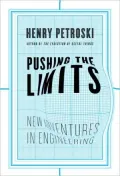
Here are two dozen tales in the grand adventure of engineering from the Henry Petroski, who has been called America’s poet laureate of technology. Pushing the Limits celebrates some of the largest things we have created–bridges, dams, buildings--and provides a startling new vision of engineering’s past, its present, and its future. Along the way it highlights our greatest successes, like London’s Tower Bridge; our most ambitious projects, like China’s Three Gorges Dam; our most embarrassing moments, like the wobbly Millennium Bridge in London; and our greatest failures, like the collapse of the twin towers on September 11. Throughout, Petroski provides fascinating and provocative insights into the world of technology with his trademark erudition and enthusiasm for the subject.From the Trade Paperback edition.
Editorials
From Barnes & Noble
Books like The Evolution of Useful Things and Pencil have earned Henry Petroski the nicknames of "the bard of engineering" and "America's poet laureate of technology." He displays his credentials for those accolades in this collection of essays on diverse topics related to his specialty. He writes lyrically about ambitious new architecture projects; describes a visit to China's new Three Gorges Dam; explores the risks of pushing technological limits; and muses on the destruction of the World Trade Center. A cogent gaze at the things we build.James Trefil
Henry Petroski, a professor of civil engineering and history at Duke University, has made it his calling to help the rest of us see the world through the eyes of the engineer. He has been called, deservedly, the "poet laureate of engineering." Pushing the Limits is a collection of essays, first published in somewhat different form in the American Scientist, that amounts to a kind of intellectual travelogue in which he shares with us an engineer's-eye view of everything from obscure bridges to crazy (and as yet unbuilt) structures that have been proposed by engineers in the past.— The Washington Post
Publishers Weekly
Petroski (The Evolution of Useful Things) again meets his usual high standard when it comes to writing about technology, but this collection of articles from American Scientist, some dating back to the early 1990s, never quite coheres as a unified text. The tendency of chapters to drift toward soft conclusions isn't disruptive in the first half of the book, devoted to bridges around the world, but the second half, which encompasses subjects ranging from the creation of the Guggenheim Museum in Bilbao, Spain, to the destruction of the World Trade Center, becomes noticeably choppy, especially when Petroski attempts to wrap things up with millennial reflections that already feel dated. The book also fails to deliver on the promise of its title; though many of his examples, especially in the bridges section, pushed the limits of engineering in their day, they can hardly be called new. (One notable exception is a long chapter on China's planned Three Gorges Dam, which also demonstrates Petroski's skillfully light touch at travel writing.) But the most glaring flaw is the frustrating paucity of illustrations (only 29)-the meticulously detailed descriptive passages can go only so far in conveying a sense of awesome beauty. At his best, Petroski is a charming guide to the landmarks he admires, and it's a shame that the presentation falls short of his talent. (Sept. 23) Copyright 2004 Reed Business Information.Library Journal
Petroski (civil engineering & history, Duke Univ.) emphasizes feats of structural engineering in this collection of essays from American Scientist. He makes a case for the art of engineering, especially as embodied by large-scale projects like bridges, spanning several centuries around the globe. Besides the Tower of London and the Guggenheim Museum Bilbao, he covers engineers and unusual structures like the Texas A&M University bonfire and even the World Trade Center attacks. Within the length constraints, Petroski manages to discuss economics, aesthetics, and safety, as well as each project's details. A glossary is not included, but the detailed index serves some of that function. This book is more narrowly focused than the author's acclaimed The Evolution of Useful Things, but Petroski's readable style makes it accessible to technically minded lay readers. Recommended for academic architecture and engineering collections, as well as for larger public and special libraries. Sara Tompson, Packer Engineering Lib., Naperville, IL Copyright 2004 Reed Business Information.Book Details
Published
December 18, 2007
Publisher
Knopf Doubleday Publishing Group
Pages
304
ISBN
9780307427366