
Latin American Fiction, Cubans & Cuban Americans - Biography
Available on Bookshop
Write a review
Books.org participates in affiliate programs including Bookshop.org and the Amazon Services LLC Associates Program. We may earn a commission from qualifying purchases made through links on this page, at no additional cost to you.
Log in to track your reading progress.
Overview
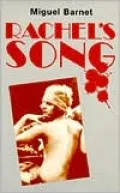
A portrait of the glamorous and energetic world of Havana, Cuba, during the 1920s and 1930s centers around the popular nightspot, the Alhambra Theater, and Rachel, the dazzling star of a troupe of rumberos, rhumba dancers, that performs there.
Editorials
Publishers Weekly -
Barnet's ( Biography of a Slave ) opening epigraph states that Rachel, a former dancer in prerevolutionary Cuba, is a ``true gauge of the country's social and political activities.'' Rachel recounts her glory days at the Alhambra Theatre, where she rose above poverty by manipulating adoring men. She glamorizes her past, saying ``I was offered castles and kings, but I declined.'' Periodic interjections by those who knew her--a review from a theater critic, an ex-husband's comments--lend perspective to Rachel's narrow view of events, frequently undercutting her. One observer notes, ``Does she lie,stet comma she does. But they're white lies.'' In Rachel's version of the ``Negroes' little war, the racist rumpus of 1912,'' American cowboys rounded up rebellious blacks with lassoes. A self-described ``revolutionary'' calls the dancer ``the best example of the prostitution, the vice and lie wrapped in a red ribbon that reigned in this country.'' But Rachel is more than an allegorical stick figure. Her poor background, tragic love affair and even ignorance--perhaps naivete--create a sympathetic character more pitiable than despicable. This is a personal, poetic history of a Cuba that no longer exists. (Sept.)Library Journal
Although written in 1969, La Cancion de Rachel has only now been translated into English. This story of a Cuban dance hall girl and her many loves, disappointments, and adventures effectively chronicles the Cuban belle epoque that began with the birth of the Republic and ended with the dictatorship of Gerardo Machado. Told by Rachel, the story is interspersed with newspaper accounts, letters, and statements by her contemporaries. Rachel is more than a dance hall girl--she represents the individual in society, a society that, like the theater she loves, is breaking apart. At the end, Rachel, now an old woman preparing to die, mourns the dissolution of the theater and life as she has known it. Barnet is known as the pioneer of the testimonial novel in Latin America and also for giving women a voice in Cuban literature. Recommended for libraries that purchase Latin American literature and for women's studies collections.--Peggie Partello, Keene State Coll., N.H.Book Details
Published
September 1, 1991
Publisher
Curbstone Press
Pages
125
Format
Paperback
ISBN
9780915306879