
Children - Animals
Available on Bookshop
Write a review
Books.org participates in affiliate programs including Bookshop.org and the Amazon Services LLC Associates Program. We may earn a commission from qualifying purchases made through links on this page, at no additional cost to you.
Log in to track your reading progress.
Overview
What is a Reptile? 411 Blunt-nosed Leopard Lizard 811 Pygmy Blue-tongued Skink 1011 Komodo Dragon 1211 Hawksbill Turtle 1411 Yellow-blotched Sawback Map Turtle 1611 Galápagos
Editorials
Children's Literature -
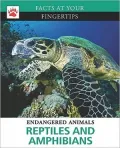
Imagine the fusion of a picture book and an encyclopedia, and you are envisioning the "Facts at Your Fingertips: Endangered Animals" series. Each page has all benefits of a picture book with large, colorful photographs that accompany the encyclopedia-style text. Each new animal is accompanied by a "data panel," which summarizes important information such as location, size, habitat, population and diet. This series focuses on animals facing extinction all over the world. Factors contributing to the animal's endangered status as well as preservation techniques are also discussed. Reptiles and Amphibians talks about well-known amphibians like the Komodo Dragon and Gila Monster as well as lesser-known animals such as the Gastric-brooding Frog. Students and teachers alike will enjoy the ease with which information is located within the book. This makes the series ideal for research and reporting, while the easily read text and colorful photographs make it perfect for leisure reading. As one of six books in the "Facts at Your Fingertips: Endangered Animals" series, Reptiles and Amphibians joins Birds, Fish, Invertebrates, Mammals of the Northern Hemisphere and Mammals of the Southern Hemisphere. Reviewer: Heather WelshChildren's Literature -
Imagine the fusion of a picture book and an encyclopedia, and you are envisioning the "Facts at Your Fingertips: Endangered Animals" series. Each page has all benefits of a picture book with large, colorful photographs that accompany the encyclopedia-style text. Each new animal is accompanied by a "data panel," which summarizes important information such as location, size, habitat, population and diet. This series focuses on animals facing extinction all over the world. Factors contributing to the animal's endangered status as well as preservation techniques are also discussed. Reptiles and Amphibians talks about well-known amphibians like the Komodo Dragon and Gila Monster as well as lesser-known animals such as the Gastric-brooding Frog. Students and teachers alike will enjoy the ease with which information is located within the book. This makes the series ideal for research and reporting, while the easily read text and colorful photographs make it perfect for leisure reading. As one of six books in the "Facts at Your Fingertips: Endangered Animals" series, Reptiles and Amphibians joins Birds, Fish, Invertebrates, Mammals of the Northern Hemisphere and Mammals of the Southern Hemisphere. Reviewer: Heather WelshVOYA -
Mammals Of The Northern Hemisphere and Reptiles And Amphibians, titles in a focused, multi-volume series, begin with a brief overview of the topic species which pays specific attention to the reasons the species is threatened. Issues such as hunting, habitat destruction, and the encroachment of humans are highlighted. Color photos and illustrations are interspersed throughout the introduction and offer a preview of individual animals discussed later. The majority of the books consist of two-page spreads on endangered animals. These spreads feature a "Data Panel," which includes population and habitat facts, and are particularly effective in demonstrating the dire circumstances of the endangered animals. Each spread offers a color photo of an individual representing the animal. In the instances of likely extinct animals, these striking photos are particularly poignant. The final pages of each volume give details about the different categories of threat under which endangered animals may be grouped, along with organizations gathering data about and advocating for threatened wildlife across the globe. This unique information, presented in a straightforward and understandable manner, is an example of why this series is worthwhile, as many readers may not be familiar with these kinds of details and may not know where to look for such an effective summary. This series will be useful for both students working on research projects and those interested in conservation, environmentalism, or just unusual animals. (Facts at Your Fingertips: Endangered Animals) Reviewer: Paula Brehm HeegerChildren's Literature -
Imagine the fusion of a picture book and an encyclopedia, and you are envisioning the "Facts at Your Fingertips: Endangered Animals" series. Each page has all benefits of a picture book with large, colorful photographs that accompany the encyclopedia-style text. Each new animal is accompanied by a "data panel," which summarizes important information such as location, size, habitat, population and diet. This series focuses on animals facing extinction all over the world. Factors contributing to the animal's endangered status as well as preservation techniques are also discussed. Reptiles and Amphibians talks about well-known amphibians like the Komodo Dragon and Gila Monster as well as lesser-known animals such as the Gastric-brooding Frog. Students and teachers alike will enjoy the ease with which information is located within the book. This makes the series ideal for research and reporting, while the easily read text and colorful photographs make it perfect for leisure reading. As one of six books in the "Facts at Your Fingertips: Endangered Animals" series, Reptiles and Amphibians joins Birds, Fish, Invertebrates, Mammals of the Northern Hemisphere and Mammals of the Southern Hemisphere. Reviewer: Heather WelshVOYA -
Mammals Of The Northern Hemisphere and Reptiles And Amphibians, titles in a focused, multi-volume series, begin with a brief overview of the topic species which pays specific attention to the reasons the species is threatened. Issues such as hunting, habitat destruction, and the encroachment of humans are highlighted. Color photos and illustrations are interspersed throughout the introduction and offer a preview of individual animals discussed later. The majority of the books consist of two-page spreads on endangered animals. These spreads feature a "Data Panel," which includes population and habitat facts, and are particularly effective in demonstrating the dire circumstances of the endangered animals. Each spread offers a color photo of an individual representing the animal. In the instances of likely extinct animals, these striking photos are particularly poignant. The final pages of each volume give details about the different categories of threat under which endangered animals may be grouped, along with organizations gathering data about and advocating for threatened wildlife across the globe. This unique information, presented in a straightforward and understandable manner, is an example of why this series is worthwhile, as many readers may not be familiar with these kinds of details and may not know where to look for such an effective summary. This series will be useful for both students working on research projects and those interested in conservation, environmentalism, or just unusual animals. (Facts at Your Fingertips: Endangered Animals) Reviewer: Paula Brehm HeegerSchool Library Journal
Gr 7 Up—Organized in an encyclopedia style, each book covers more than 20 endangered species, devoting a spread to each one. An introduction provides context on the whole group. A data panel for every profiled creature lists basic information, such as scientific name, population, range (with map), size, diet, and breeding, while the text focuses on how the animal lives and why it's endangered. The categories of threat (vulnerable, endangered, etc.) assigned by the International Union for Conservation of Nature are included, along with an explanation of these classifications and facts about other conservation organizations. Due to the dense amount of information, these titles would most likely be used by students seeking resources for assignments; unfortunately, some animals (such as the sea otter and Steller's sea lion) have been omitted from the index, and others (such as the kiwi) must be located under their full name (Northern brown kiwi).School Library Journal
Gr 7 Up—Organized in an encyclopedia style, each book covers more than 20 endangered species, devoting a spread to each one. An introduction provides context on the whole group. A data panel for every profiled creature lists basic information, such as scientific name, population, range (with map), size, diet, and breeding, while the text focuses on how the animal lives and why it's endangered. The categories of threat (vulnerable, endangered, etc.) assigned by the International Union for Conservation of Nature are included, along with an explanation of these classifications and facts about other conservation organizations. Due to the dense amount of information, these titles would most likely be used by students seeking resources for assignments; unfortunately, some animals (such as the sea otter and Steller's sea lion) have been omitted from the index, and others (such as the kiwi) must be located under their full name (Northern brown kiwi).School Library Journal
Gr 7 Up—Organized in an encyclopedia style, each book covers more than 20 endangered species, devoting a spread to each one. An introduction provides context on the whole group. A data panel for every profiled creature lists basic information, such as scientific name, population, range (with map), size, diet, and breeding, while the text focuses on how the animal lives and why it's endangered. The categories of threat (vulnerable, endangered, etc.) assigned by the International Union for Conservation of Nature are included, along with an explanation of these classifications and facts about other conservation organizations. Due to the dense amount of information, these titles would most likely be used by students seeking resources for assignments; unfortunately, some animals (such as the sea otter and Steller's sea lion) have been omitted from the index, and others (such as the kiwi) must be located under their full name (Northern brown kiwi).Book Details
Published
August 1, 2011
Publisher
Brown Bear Books/Joe Hollander
Pages
64
Format
Hardcover
ISBN
9781936333363