
Rocks, Minerals & Gems, Rocks, Minerals & Metals
Log in to track your reading progress.
Overview
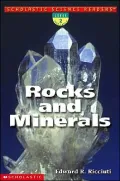
The Earth's rocks and minerals come to life! The Scholastic Science Readers series was created especially to bring exciting nonfiction to beginning readers. Illustrated with full-color photographs.
This simple introduction to rocks and minerals illustrates where they come from, as well as the many ways in which they are formed.
Young readers will explore the layers of the Earth and find out whether common rocks are igneous, metamorphic, or sedimentary.
Fossils and gemstones are also discussed.
Detailed full-color spreads help beginning naturalists observe and understand over 150 types of rocks and minerals.
Editorials
Children's Literature -
Glistening graphics and clearly organized text distinguish this field guide. The first third of the book explains basic geology and mineralogy plus the identification of basic types of rocks and minerals. Hardness, specific gravity, luster, streak, and crystal shape as keys to rock identification are also lucidly explained. The rest of the book presents double page spreads including photographs of rocks or minerals, each with a major rock such as gypsum clearly pictured and then defined by properties, colors, and typical environment in which it might be found. Sidebars introduce anhydrite and sulphur and explain how they relate to the key rock or mineral. Useful as an individual field guide, it also serves in classroom reference or textbook because of its clarity and easily accessed science information. A glossary, table of minerals (with chemical symbols), index, and further references are also included. Part of the "National Audubon Field Guide" series.School Library Journal
Gr 5 Up-These handsome books, illustrated with vibrant, full-color photographs, have a lot to offer, but calling them "first field guides" is somewhat misleading. They assume some previous knowledge and background vocabulary, and are not designed to give users quick reference to found items. Instead, they introduce their respective subjects and offer tips on equipment and observation. "How to look" sections give the basic science behind the fields of study. Then come the actual guides, which contain photographs of 50 common wildflowers or rocks and other similar species or formations. Boxed inserts detail the specific information. In Wildflowers, each entry lists what to look for, leaves, height, when the flower blooms, habitat, range, and cautions (when applicable). For Rocks, the boxed inserts give the mineral composition, texture, color, and environment. Each book concludes with an illustrated glossary; Wildflowers includes pictures of the 50 state flowers. Both titles have current lists for further reading that cover a wide range of reading levels and include Web sites. These are attractive and useful additions, but are not stand-alone field guides, per se.-Kathryn Kosiorek, Cuyahoga County Public Library, Brooklyn, OHBook Details
Published
October 1, 2002
Publisher
Scholastic, Inc.
Pages
32
Format
Paperback
ISBN
9780439382465