
United States - Civil Rights Movement - History, African American - Biography - General, African American Civil Rights Leaders - Biography
Log in to track your reading progress.
Editorials
VOYA
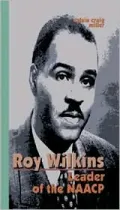
Introducing the events, people, and time lines that make up the history of the African American experience, this series brings to life the movers and shakers of the civil rights movement. The series as a whole presents the background and viewpoints of several key players in the movement, adding a balance and depth missing from many one-volume texts that portray similar information. Each book could be read and enjoyed individually as a recreational read or used for a research source for an individual or historical event. Roy Wilkins was lucky enough to be raised in an integrated middle-class neighborhood in St. Paul, Minnesota. He did not personally experience the degradation and prejudice found in the Jim Crow South, which may have fueled his conviction that the color line did not have to exist, a principle that led him to a career in journalism and later to lead the NAACP. Wilkins was instrumental in bringing African American issues into the public eye through the press and was very active in pushing the civil rights movement into the political arena. This series is engaging, thorough, thought provoking, and would be an excellent addition to any public or school library. With the extensive bibliographic notes included in each volume, the student can easily find supplemental information on any or all topics introduced. Other titles in the series include No Easy Answers: Bayard Rustin and the Civil Rights Movement, A. Philip Randolph and the African-American Labor Movement both by Calvin Craig Miller, and A Stranger in My Own House: The Story of W. E. B. Du Bois by Bonnie Hinman. (Civil Rights Leaders). VOYA CODES: 5Q 2P M J S (Hard to imagine it being any better written; For the YA with aspecial interest in the subject; Middle School, defined as grades 6 to 8; Junior High, defined as grades 7 to 9; Senior High, defined as grades 10 to 12). 2005, Morgan Reynolds, 176p.; Index. Photos. Biblio. Source Notes. Chronology., PLB . Ages 11 to 18.—Angie Hammond
School Library Journal
Gr 7-10-An adequate, if somewhat uneven, portrait of the leader and activist. Miller traces Wilkins's mostly comfortable childhood with his aunt and uncle in St. Paul, MN. The family was involved with the NAACP almost since its inception in 1909. Racism was brought home in 1920 when a mob lynched three African-American men in a nearby town. After college, Wilkins took a job at the Kansas City Call, an African-American newspaper, and later began working at the NAACP, becoming its executive secretary in 1955. Throughout his tenure with the organization, he worked with such Civil Rights leaders as Martin Luther King, Jr., and Thurgood Marshall and Presidents Truman and Johnson to improve racial equality. This portrait is detailed and revealing, highlighting the man's achievements, challenges, and missteps. However, the sections that delve into the infighting among staff at the NAACP are sometimes hard to follow. Also, the author's attempt to place Wilkins's story into historical context sometimes overwhelms the biography. Black-and-white and color photographs appear throughout.-Kristen Oravec, Cuyahoga County Public Library, Strongsville, OH Copyright 2005 Reed Business Information.Book Details
Published
May 5, 2005
Publisher
Greensboro, N.C. : Morgan Reynolds, c2005.
Pages
176
Format
Binding
ISBN
9781931798495