
United States History - Social Aspects, Newspapers & Magazines - General & Miscellaneous, Mass Media - History, Marketing - General & Miscellaneous, Advertising - Media & Media Planning, Popular Culture - United States, Advertising - History & Criticism
Log in to track your reading progress.
Overview
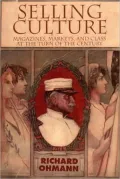
At the turn of the nineteenth century, American capitalism was in crisis, producing too many goods for too few buyers. That crisis was ultimately resolved in a novel, historically decisive manner by creating whole new categories of consumer goods and appealing to new groups of people which might purchase them. What we now recognize as consumer society originated in this period, and it was mass culture, the first "culture industry," that helped to bring it into being. In a magisterial study of this process, Richard Ohmann surveys the new practices of advertising, mass distribution of goods, and, most important, the birth of the inexpensive mass-audience magazine to analyse the creation of the American professional-managerial class. Drawing upon work in economic, cultural, and social history, he integrates the seemingly disparate phenomena of modern middle-class life in a coherent tale of how this class was formed and came to occupy the foreground in that malign ideological formation "the American Dream."Editorials
Publishers Weekly -
Drawing, in part, from what the author, a former editor of College English, calls "the broad marxist tradition," this is a highly ideological social and economic history of the rise of low-cost, high-circulation monthly magazines in America at the end of the 19th century. The era marked what Ohmann sees as the beginning of a nationwide mass culture rooted in advertising that continues to this day, a culture based on using information and entertainment as commodities. Thanks to developments in technology, Ohmann notes, the U.S. moved from being an industrial country to a marketing one; and along the way, a professional managerial class established itself. Among the magazines given special attention (including a study of the fiction published) are Munsey's, McClure's and Ladies' Home Journal. Topics touched on include the birth of department stores, mail order and chain stores; the rise of the suburbs; and the triumph of advertising agencies, which, according to Ohmann, articulated the goals and formulated the strategies of "the big bourgeoisie." Less politically-minded readers might be tempted to skip the ideological sections and mine this highly researched study for the richindeed lavishamount of raw information it contains on the growth of popular culture. Illustrations. (June)Booknews
Surveys the new practices of advertising, mass distribution of goods, and the birth of the inexpensive mass-audience magazine at the end of the 19th century, and their role in the creation of the American professional-managerial class. Focuses on magazine publishing, careers of key personalities in the publishing world, and the role of fiction in the magazines. For students and general readers. Annotation c. by Book News, Inc., Portland, Or.Book Details
Published
May 3, 1996
Publisher
London ; Verso, 1996.
Pages
1
Format
Hardcover
ISBN
9781859849743