
Slavery - Social Sciences, World History, World History - General & Miscellaneous
Log in to track your reading progress.
Overview
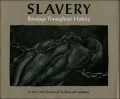
Since the beginning of civilization there have been slaves. Men and women, young and old, black and white, from China to Brazil and everywhere in between, millions have been enslaved. Richard Watkins traces the countless journeys and trials of slaves around the world and throughout time, and champions those who fought against it and helped shape slave-free nations for future generations.
Editorials
Children's Literature
This is a moving look at an "institution" that has existed as long as there have been people. The narrative is well-done, bringing power to stories that have been heard before, as well as tales of kings and Pharaohs whose names are totally unfamiliar. The shear amount of riches is mind-boggling—in 2350 B.C., Sargon, king of Sumeria, owned 9000 slaves. At times Watkins seems to repeat himself. But it isn't exactly repetitive; it is simply that the same things have happened to people in various times and places throughout history, emphasizing the commonality of human experience. From the earliest civilization in Mesopotamia, slaves "were considered a valuable resource—human tools that could work..." Eventually they "came to be thought of as status symbols..." What is truly memorable about this book, however, is the quality of the illustrations. Done in pencil and marker on vellum, "beautiful" is too simple a word. It is hard to believe they weren't made from direct observation. They are powerful accompanists to the stories and can bring us to tears. Watkins spares us from none of slavery's more horrible punishments, in illustrations as well as words. Whipping and sacrifice, children especially, were common in slave-owning societies. The Chinooks, from what is now British Columbia, "staked a slave to the grave of a family member and left him or her to starve to death in the belief that the slave could serve the departed one in the next life." In case we thought that slavery has disappeared from earth's "advanced" societies, Watkins neatly disabuses us of that naïve idea. A glossary, useful for unfamiliar terms, and an excellent index round out this wonderful, readable book.Recommended for older children and adults. 2001, Houghton Mifflin Company, $18.00. Ages 11 up. Reviewer: Judy SilvermanSchool Library Journal
Gr 6-10-A brilliantly written treatment of an abhorrent topic. Watkins elucidates the concept of "a person [being] owned by another as a piece of property" as playing a significant role in many civilizations from Babylon and Brazil to Native Americans and the Nazis. Students' eyes will be opened by the facts that "slavery hasn't always been racially motivated" and that it still exists today. Short biographical sketches and first-person accounts prove this by highlighting many hideous experiences, including those of a Southern U.S. cotton plantation slave, a forced laborer under Stalin's regime, and a boy killed in 1995 after being owned by a Pakistani carpet maker since the age of four. The text is straightforward while demonstrating an appropriate sensitivity, including a clear explanation of the current practice of child prostitution in Southeast Asia. (Uncharacteristically, the definition of concubine is vague.) Chapters are logically arranged to shed a global perspective on how enslaved peoples have been captured, shipped, sold, and treated for thousands of years; they are also able to stand alone. The numerous illustrations, done in pencil and marker on vellum, are stylized in a grim manner, but are not as strong as the text. This title is the most successful at such a broad aim since Milton Meltzer's All Times, All Peoples: A World History of Slavery (Harper & Row, 1980; o.p.) and is a must for all collections.-Andrew Medlar, Chicago Public Library, IL Copyright 2001 Cahners Business Information.Book Details
Published
August 14, 2001
Publisher
Houghton Mifflin (Trade)
Pages
144
Format
Hardcover
ISBN
9780395922897