
Acoustics & Sound Technology, Physics Experiments, Science & Technology Experiments, Acoustics & Physics of Music, General & Miscellaneous Science
Log in to track your reading progress.
Editorials
Children's Literature
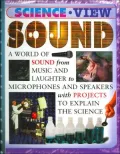
Would you like to know how to make a "Sound Cannon?" As the blurb on the cover proudly claims, this book examines the "world of sound from music and laughter to microphones and speakers with projects to explain the science." Chapters cover: the definition of sound, measuring sound, pitch, the sound spectrum, the speed of sound, the Doppler effect, bouncing sound waves, vocal chords, pitch, hearing, vibration, recording sound, musical sound, noise, ultrasound, and infrasound. In the back the "Facts and Measurements" page contains supplemental information about vibrations, wavelengths, frequencies, amplitude, volume, the Mach scale, and a chart listing examples of different sounds from 10 decibels to 100 decibels. Photographs and clearly labeled diagrams fill the pages and give a visual explanation to support the text. In each chapter boxes marked with a little cog shape and the words "How it Works" explain the science behind a particular project or theory. Nearly every chapter has a "Project Panel" section, which is marked by a thick black band. As a disclaimer, the introduction warns that "scientists are cautious" and "they always put safety first." Most of the projects are made with common household items and have easy instructions to follow. In the chapter on sound waves, the project is a "Sound Cannon." Readers can make this with a cardboard tube, tape, and some plastic wrap. The back matter contains a glossary and an index. This book is part of Chelsea House Publisher's "Science View" series, which includes the titles Chemicals and Changes, Electricity and Magnetism, Forces and Motion, Heat and Energy, Light, and Sound. 2005, Chelsea House, Ages 7 to 12.—SallyJ. K. Davies
Book Details
Published
January 1, 2005
Publisher
Chelsea House Publications
Pages
32
Format
Hardcover
ISBN
9780791082102