
World Literature, Fiction Subjects, Peoples & Cultures - Fiction
Log in to track your reading progress.
Overview
Master storyteller Naguib Mahfouz crowns his best-selling Cairo Trilogy with this final chronicle of the Abdal-Jawad clan, climaxing the story begun in Palace Walk and continued in Palace Of Desire.The New York Times Book Review called Palace Walk, the first volume of the Cairo Trilogy, "a tale told with great affection, sensitivity, and humor" and described Palace of Desire, the second volume, as "elegant and often explosive." The Nobel Prize winner now offers the climactic third volume, print.
Synopsis
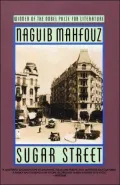
Master storyteller Naguib Mahfouz crowns his best-selling Cairo Trilogy with this final chronicle of the Abdal-Jawad clan, climaxing the story begun in Palace Walk and continued in Palace Of Desire.
Publishers Weekly
Nobel laureate Mahfouz's third volume of his Cairo Trilogy, a stunning portrait of a family in dissolution, mirrors its setting--an Egypt that is adjusting to the modern world. (Jan.)
Editorials
Publishers Weekly -
Nobel laureate Mahfouz's third volume of his Cairo Trilogy, a stunning portrait of a family in dissolution, mirrors its setting--an Egypt that is adjusting to the modern world. (Jan.)Kirkus Reviews
The final volume in Nobel laureate Mahfouz's magisterial Cairo trilogy takes the Abd al-Jawad family from a rising tide of nationalist sentiment in 1935 through the darkness and confusion of WW II, as Britain defends an Egypt officially neutral. Yet national politics, for all its importance as background accompaniment here (as in Palace Walk and Palace of Desire), is usually kept just offstage—"They say that Hitler has attacked," old family servant Umm Hanafi announces halfway through, and matriarch Amina's final illness coincides with a bombing raid—as Mahfouz continues to dramatize the emergence of modern Egypt through ailing family head Ahmad Abd al-Jawad's family—his sons, sensualistic Yasin and scholarly Kamal; his daughters, prematurely aged widow Aisha and settled wife and mother Khadija; and his five grandchildren. As perennial bachelor Kamal methodically visits his father's favorite brothel and frets about whether to marry, the focus of the trilogy shifts from Palace Walk to Khadija's home with Ibrahim Shawkat on Sugar Street, where the couple's sons—Abd al- Muni'm, turning toward fundamentalist Islam, and increasingly committed Communist Ahmad—argue about their duty to the country and the nature of Egyptian society, but both end meeting the same fate. Meanwhile, Yasin's son Ridwan rises rapidly through the ranks of the civil service with the aid of magnetic, homosexual Pasha Isa, and their sister Karima, like Aisha's daughter Na'ima, prepares to receive the inevitable wedding proposal—though both times from a surprising source. Individual episodes—Ahmad Abd al- Jawad's hazy awareness that his friends are all dying; Kamal's abortive romancewith Budur Shaddad, sister of his far-distant first love Aida; and his final tormented guilt over his moral paralysis—show Naguib's Tolstoyan economy at its most dramatic, though the third generation of his family makes a more muted impression than the first two. Mahfouz writes in the great tradition of the 19th-century novel from Balzac to Buddenbrooks. His trilogy shows just how rich and vital that tradition remains in the hands of a master.Book Details
Published
December 1, 1992
Publisher
Knopf Doubleday Publishing Group
Pages
320
Format
Paperback
ISBN
9780385264709