
Media Studies, Journalism & News, Labor & Business Figures - Biography, Business, Radio & Television
Log in to track your reading progress.
Editorials
School Library Journal
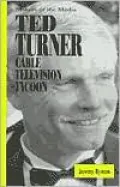
Gr 6-9-This biography lacks passion and enthusiasm. The superficial, dry text reads as if it were composed from a succession of newspaper and magazine articles. Turner's childhood, which included attendance at boarding and military schools, is chronicled as is a rocky relationship with an alcoholic abusive father. The years at Brown University (he did not graduate) illustrate his penchant for alcohol and women, a problem that would remain for years. Several unflattering anecdotes are recounted to illustrate Turner's "sense of humor" while at school (singing Nazi songs in front of the Jewish fraternity and putting up Ku Klux Klan warning signs on the doors of African-American students). The author does a good job of portraying his subject's drive and ingenuity as he began his mercurial career with Turner Advertising. His entrepreneurial successes--the creation of CNN, Headline News, TNT, and the purchase of the MGM film library--are all related. The coverage extends to 1997 when the tycoon donated one billion dollars to the United Nations. A few black-and-white photographs illustrate the book. Libraries owning Rebecca Stefoff's Ted Turner, (Garrett, 1992) or David Marc Fischer's Ted Turner (Rourke, 1993) may want to wait for a more distinguished offering to update their collections.-Jennifer Ralston, Harford County Public Library, Belcamp, MDKirkus Reviews
This superficial biography has been pasted together mostly from magazine articles, andþlacking vigor and immediacyþit shows. The facts of Turner's childhood are sketched out, including his education at boarding and military schools, and, rather baldly, his father's child-rearing philosophy: "Ed wanted Ted to be obedient, but insecure, so he would grow up to be ambitious and work for everything he received." When his father killed himself, Turner took over his billboard business and began creating an empire. His sometimes riotous behavior, romantic liaisons, and mental-health treatment are covered here, along with his roller-coaster career, and Byman provides a good overall look at the risk involved and the ingenuity displayed as Turner bought radio stations and a baseball team, created CNN, and attempted to purchase CBS, among many other entrepreneurial moves. His social evolution is related in a detached manner, often with a minimum of useful context, e.g., "He put up warning signs from the Ku Klux Klan on the doors of the few black students in the dorm. His intention was to be funny. But other students did not share his sense of humor." A list of Time-Warner's holdings is an odd addition to the backmatter. (b&w photos, chronology, bibliography, index) (Nonfiction. 12-14)Book Details
Published
July 1, 1998
Publisher
Morgan Reynolds Publishing
Pages
112
Format
Binding
ISBN
9781883846251