
Psychological Self-Help, Children - Social Issues, Emotional Healing, Personal Growth, Children - Fiction & Literature, Children - Health & Medicine
Log in to track your reading progress.
Overview
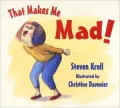
What makes Nina mad? Well, just the kinds of things that would make any kid mad—Sometimes you talk about me like I'm not even there . . . When I want you fast and it takes you forever . . . When it's my turn to talk and nobody listens . . . that makes me mad!In this spirited portrait of daily life through the eyes of a child, Steven Kroll reveals precisely what drives children crazy. First published in 1976, these vignettes still resonate with profound humor and emotional truth while Christine Davenier's all-new illustrations overflow with buoyant energy and expression. Here is an ideal book for parents and children to share-for pure pleasure or for exploring emotions and family love.
A little girl gets mad at a lot of things in her daily life but is comforted that her mother understands her anger.
Editorials
Publishers Weekly
Nina's ire is stirred by her own limitations, by adults' underestimation, by rules and by toys that insist on getting lost. Kroll (The Biggest Pumpkin Ever), who first published this text in 1976, catalogs these and other peeves with sympathy and honesty, while Davenier (The First Thing My Mama Told Me, reviewed April 22) contributes shimmering, balletically brushstroked spot watercolors that trace the heroine's tempest-tossed internal state. "When you get mad at me and it's not my fault, that makes me mad," Nina says, the titular refrain spelled out in bold type. The words lead into a bathtub drama, in which Nina is left in charge of Tony, her toddler brother and co-bather. As Tony gradually floods the floor (Davenier sends ribbons of translucent blue color flying from the tub and Tony's mouth) Nina's countenance grows stormier, then changes to indignant when her mother holds her responsible. This pattern repeats with scenarios familiar to children and parents everywhere, each rendered respectfully by the artist, who still manages to uncover the humor in each situation. Can Nina's wrath ever be defused? The last spread supplies the answer: "But it makes me feel better when you let me tell you how angry I am!" A warm embrace with her mother on the final page proves that when her frustrations are acknowledged, even Nina can't stay angry for long. Ages 4-8. (Aug.) Copyright 2002 Cahners Business Information.School Library Journal
PreS-Gr 1-A story published in 1976 (Random; o.p.), newly illustrated. Nina talks about all of the things that really make her mad, which is just about everything. It angers her when her dad tells her she is going to love fish for dinner, when she really hates it, or when her mother punishes her because her little brother gets water all over the bathroom floor, when she was supposed to be in charge. She gets mad at herself when she tries to dress herself and "it doesn't come out right." And, "When it's my turn to talk and nobody will listen, that makes me mad." The use of different print sizes and fonts to emphasize mood and expression is visually effective. Colorful, humorous cartoonlike vignettes capture the kindergartner's frustrations and joys in her relationships with her parents, sibling, and friends. This is an excellent concept book to introduce emotions and the importance of controlling them. Teachers can also use it to introduce the nuances of language in print.-Wanda Meyers-Hines, Ridgecrest Elementary School, Huntsville, AL Copyright 2002 Cahners Business Information.Kirkus Reviews
Re-introducing Nina, a grammar-school girl first on the scene in 1976, who doesn't have any trouble expressing her feelings of anger. With each page, she faces a new situation, but all of them lead to the same reaction: "When you won't let me help and I know I can, that makes me mad." Or: "When you make a promise and then you break it . . . " While illuminating the reality of children's frustration and anger, this works for young readers, who can relate to Nina's challenging predicament, and for adults who may overlook a child's intense desire to become independent. Parents would also be wise to use the story as a lesson for teaching the importance of patience, since sometimes the things that make Nina mad turn out okay. In new illustrations, Davenier (The First Thing My Mama Told Me, 2002, etc.) animates Nina and her family with swift brushstrokes using watercolor to create a layered effect that shades with a combination of techniques, including a dab of acrylic on a semi-dry brush that bares a striking likeness to crayon. The uncommon style used to create spilling water is particularly effective. Black pencil lends definition and a rainbow of color creates fun, unusual-looking hair. A useful topic, worthy of exploration. (Picture book. 4-8)Book Details
Published
August 1, 2002
Publisher
Chronicle Books LLC
Pages
32
Format
Hardcover
ISBN
9781587171833