
Telecommunications Technology
Log in to track your reading progress.
Overview
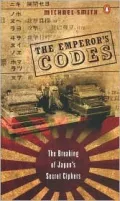
In this gripping, previously untold story from World War II, Michael Smith examines how a group of eccentric codebreakers cracked Japan's secret codes and turned the tide of the war in the Pacific. Drawing upon recently declassified British files, privileged access to Australian secret official histories, and interviews with many of the men involved, The Emperor's Codes takes the reader step-by-step through the codebreaking process, explaining exactly how the codebreakers went about their daunting task-made even more difficult by the vast linguistic differences between Japanese and English. It details the grueling work and almost unfathomable dedication demonstrated by these relatively unsung heroes, without whose extraordinary exploits the outcome of World War II might have been very different.Editorials
From Barnes & Noble
There have been many books written on the efforts by American and British codebreakers to unlock the mysteries of the Nazi's Enigma Code, but little has been written about the struggle to break the various Japanese codes, which were inherently more difficult to crack due to the complex Japanese language. British journalist Michael Smith tells the full story -- and debunks some of the myths -- surrounding this vitally important wartime effort. Among the misconceptions Smith is out to correct: that the American codebreakers were the primary ones to break the main Japanese naval codes. In fact, Smith claims, it was the British group that prevailed, even in the face of the U.S.'s unwillingness to share vital intelligence with their closest allies.Library Journal
During World War II, British and American cryptographers labored in tight security at Bletchley Park and elsewhere, poring over thousands of intercepted Japanese and German military messages. This fascinating story has been told and retold over the past 15 years as more new information emerges. Smith, a British journalist and author of Station X: Decoding Nazi Secrets, has now expanded on the subject with this well-written account of how the Americans with a great deal of help from British codebreakers cracked the Japanese codes. Smith portrays the sometimes bitter competition between American naval and British military personnel and insists that the British deserve a greater share of the credit than the Americans have been willing to grant. All in all, it makes a great story and one of importance, since many historians believe that through their codebreaking efforts the Allies were able to shorten the war by as much as two years. Libraries should add Smith's book to other recent works, including Stephen Budiansky's Battle of Wits (LJ 9/15/00) and Leo Marks's Between Silk and Cyanide (LJ 4/15/99). Recommended for most collections. Ed Goedeken, Iowa State Univ. Lib., Ames Copyright 2001 Cahners Business Information.Booknews
The US was surprised by Japan's bombing of Pearl Harbor largely because of an inability to decode "superenciphered" messages about the coming attack. Codebreaking<-->most famously, of the Nazis' Enigma code<-->also played a key role in bringing World War II to an end. Smith tells the little-known story of how American and British codebreakers cracked the Japanese code and contributed to the Allies' victory in the Pacific. A journalist who worked for nine years in British Army intelligence, Smith uses recently declassified British files, access to secret Australian histories, and interviews with many of the codebreakers to spin out the ripping tale of how they did it. With b&w photos of the players and an insert mapping each step of the decoding process. Annotation c. Book News, Inc., Portland, OR (booknews.com)Kirkus Reviews
An account of American and British operations that broke Japanese codes during WWII. Japan and Germany did not lose the war because of the Allied advantage in numbers and material-all the big turning-point battles occurred early on, when the Allies were outnumbered. It was stupidity that defeated the Axis, and nothing illustrates this better than the story of codebreaking. In 1943, when fighters shot down a transport carrying Admiral Yamamoto, it was publicized as a lucky accident-but, in fact, details of his flight had been broadcast by the Japanese and intercepted. Inferior American forces could not have won the key naval battle of Midway without knowledge of enemy positions given by Japanese transmissions: American submarines devastated Japanese shipping because we knew their routes and positions. Even Pearl Harbor came as a shock not through poor codebreaking, but because US intelligence concentrated on reading the Japanese diplomatic (rather than military) code. We knew their diplomats negotiating in Washington were not serious and that Japan was about to launch a war, but the details were elsewhere. British journalist Smith (Station X, not reviewed) includes a fascinating step-by-step explanation of codebreaking, but most readers will probably not be able to follow beyond the first steps. Because of their difficult language and sense of intellectual superiority, the Japanese assumed their codes were unbreakable-but they were merely difficult. The codebreakers themselves were a collection of academics, geniuses, and eccentrics assisted by a vast army of clerks (including many women). There were also plenty of small-minded bureaucrats and arrogant (mostly American) officialsunwilling to share information, so progress was often unnecessarily slow. A fine contribution to the genre: The author has done his homework well, interviewing survivors and poring over old records to tell the story of one of the greatest capers of the century.Book Details
Published
November 1, 2002
Publisher
Penguin Books
Pages
368
Format
Paperback
ISBN
9780142002339