
Translating & Interpreting, Language, Philosophy of, Technology Industries - General & Miscellaneous
Log in to track your reading progress.
Overview
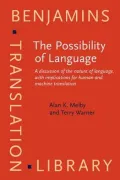
This book is about the limits of machine translation. It is widely recognized that machine translation systems do much better on domain-specific controlled-language texts (domain texts for short) than on dynamic general-language texts (general texts for short). The authors explore this general — domain distinction and come to some uncommon conclusions about the nature of language. Domain language is claimed to be made possible by general language, while general language is claimed to be made possible by the ethical dimensions of relationships. Domain language is unharmed by the constraints of objectivism, while general language is suffocated by those constraints. Along the way to these conclusions, visits are made to Descartes and Saussure, to Chomsky and Lakoff, to Wittgenstein and Levinas. From these conclusions, consequences are drawn for machine translation and translator tools, for linguistic theory and translation theory. The title of the book does not question whether language is possible; it asks, with wonder and awe, why communication through language is possible.Editorials
Booknews
Deals with the relationship between linguistics and comparative literature and the possibilities of machine translation and machine- assisted translation, asking whether it is possible in principle to construct a fully automatic system to translate unrestricted general language and exploring the implications of such a system. Includes a glossary. Of interest to scholars in translation and linguistics, as well as machine translation developers and theorists. Annotation c. Book News, Inc., Portland, OR (booknews.com)Book Details
Published
November 28, 1995
Publisher
Amsterdam ; J. Benjamins, 1995.
Pages
302
Format
Hardcover
ISBN
9781556196959