
Fiction - African American, Fiction - Social Issues, Fiction - Historical Fiction, Fiction - Emotions & Behaviors, Fiction - Schools & Friendship, Fiction - Family Life, Fiction - U. S. People, Places & Cultures
Log in to track your reading progress.
Overview
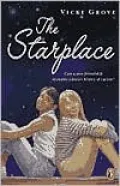
It's the early 1960s and Frannie has never given much thought to the color of her skin-until an African-American girl named Celeste moves to her hometown in Oklahoma. At first, Frannie ignores Celeste, but when the two girls are chosen to be in a special vocal ensemble, they find themselves becoming friends. But others are not so quick to accept the idea of racial integration, and Frannie discovers a dark secret from the town's past that threatens the future of her friendship with Celeste."A wonderful, well-written, multilayered novel with lots of appeal."-School Library Journal, starred review
"The account of Frannie's emerging conscience, increasing awareness of history, and developing friendship with Celeste is compelling."-The Bulletin of the Center for Children's Books
Awards:
A School Library Journal Best Book of the Year
Thirteen-year-old Frannie learns hard lessons about prejudice and segregation when she becomes friends with a young black girl who moves into her small Oklahoma town in 1961.
Editorials
Publishers Weekly -
Grove (Reaching Dustin) cuts social commentary with a hint of mystery in this story set in small town Quiver, Okla., during the early '60s. Although the local junior high is not officially segregated, it remains all white until an African-American girl, Celeste Chisholm, and her professor father move into the old Teschler place, a rambling house reputed to be haunted. Celeste's enrollment causes a rift among students, and for the first time, narrator Frannie Driscoll becomes aware of the strong undercurrent of prejudice in her community. Celeste's cruel reception jolts Frannie out of her own unwillingness to make waves, and she and Celeste become friends. Quiver's sunny image is gradually shattered for Frannie, especially when she learns the horrible truth about the Teschler place, where Ku Klux Klan lynchings were once organized. The secret past of Quiver will shock most readers; the author's acknowledgments, of anonymous neighbors who found Klan "rule books" hidden in their attic, speak to the authenticity of this powerful story. Ages 10-up. (June) Copyright 1999 Cahners Business Information.Library Journal
Gr 6-9-Frannie learns hard truths about racism in her small Oklahoma community when she befriends a black girl who is new in town. The balanced narrative incorporates serious issues, adolescent angst, and the transcendent power of friendship. (June) Copyright 1999 Cahners Business Information.School Library Journal
Gr 6-9In this powerful coming-of-age tale, written with grace and poignancy, Grove transports readers to Quiver, OK, in 1961. Thirteen-year-old Frannie Driscolls world is turned upside down by the arrival of Celeste Chisholm, the first black student in the school. Celeste is ignored by most of her classmatesuntil she sings in choir with a voice that takes ones breath away. When both girls are chosen for a special vocal ensemble, their friendship blossoms. They practice together in an abandoned playground rocket ship, a place they go to get above things, but which is unable, finally, to isolate them from the racism of the town. Celestes father, a professor, is doing research on the house he has purchasedresearch that exposes the rituals of the Ku Klux Klan and uncovers how Celestes great-grandfather was tortured to death. Racism is not limited to the past, however. When the vocal ensemble, ironically called Ladies in Harmony, is invited to a very select competition, the town fathers manage to remove Celeste from the group, and Frannies feelings about her hometown are changed forever. Even as Celeste moves away, Frannie learns that friendship survives skin color. The characterizations, particularly of Frannie and Celeste, are strong and memorable. Grove richly evokes the era of the early 60s, from Dragnet and American Bandstand to teased hair, Vietnam, and the beginning of the Womens Movement. A wonderful, well-written, multilayered novel with lots of appeal.Connie Tyrrell Burns, Mahoney Middle School, South Portland, ME Copyright 1999 Cahners Business Information.Kirkus Reviews
A quirky cast and some heavy issues never quite mesh in this ineffective tale about a teenager who discovers some ugly truths about her small town in 1961. Despite having lived in Quiver, Oklahoma, her entire life, Frannie Driscoll doesn't know that her town is segregated until Raymond Chisholm and his daughter, Celeste, arrive for a brief stay. Disturbed by the way Celeste, the school's only African-American student, is shunned and insulted, Frannie makes awkward overtures that are coolly received, but soon result in friendship. After dropping hints about her father's research, Celeste shows Frannie a hidden room in the attic of her house and later relates a horrifying tale of Ku Klux Klan atrocities in Quiver in the 1920s. For no obvious reason, Grove keeps present prejudice and past racism separate, disassociating the contemporary cast from any taint of the Klan, even though it's logical to think that some of the area's white families had ancestors who were members. A subplot involving Frannie's mother and a sexist employer only muddies the waters; a protest that Celeste's classmates mount comes as a surprise, considering their earlier behavior; and the irony is anything but subtle when Celeste is cut from the school choir just before a statewide competition that is, predictably, won by an integrated group. Celeste—beautiful, mature, worldly, and a great singer—comes close to being a type; Frannie's other friends are an engagingly diverse lot, which lightens the ship, but not enough to keep it afloat. (Fiction. 11-13)Book Details
Published
December 1, 2000
Publisher
Putnam Publishing Group
Pages
224
Format
Paperback
ISBN
9780698118683