
Fiction, World Literature, Fiction Subjects
Log in to track your reading progress.
Overview
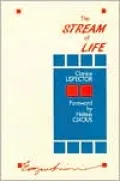
This novel is considered the greatest work of fiction by the Brazilian writer the New York Times Book Review called "the premier Latin American woman prose writer of this century." An intense and lyrical work, it chronicles its female protagonist's journey of self-discovery and self-affirmation.Synopsis
This novel is considered the greatest work of fiction by the Brazilian writer the New York Times Book Review called "the premier Latin American woman prose writer of this century." An intense and lyrical work, it chronicles its female protagonist's journey of self-discovery and self-affirmation.
San Francisco Review Of Books Staff
Whether as novelist or short story writer, Lispector always seemed to be involved with the ambiguities of living, the pleasures derived from it as well as its tragic aspects.
Editorials
San Francisco Review Of Books Staff
Whether as novelist or short story writer, Lispector always seemed to be involved with the ambiguities of living, the pleasures derived from it as well as its tragic aspects.Publishers Weekly -
This rarefied novel adopts the form of the interior monologue characteristic of Lispector's (1925-1977) oeuvre. A woman sits by the open window of her Brazilian beachfront studio, writing a long letter to someone no more specific than ``you.'' She parries with language (which is ``only words which live off sound'') and is wholly consumed with problems of epistemology: ``I want to die with life.'' A painter, she struggles as well to recreate the world around her: ``On certain nights, instead of black, the sky seems to be an intense indigo blue, a color I've painted on glass.'' When she listens to music, she says, ``I rest my hand lightly on the turntable and my hand vibrates, spreading waves through my whole body.'' While the narrator's self-consciousness (``And if I say `I,' it's because I don't dare say `you,' or `we,' or `a person.' I'm limited to the humble act of self-personalization through reducing myself, but I am the `you-are.' '') and diction (``the ultimate substratum in the domain of reality'') may strike some readers as academic, others will appreciate the challenges of Lispector's philosophical investigations. (June)Library Journal
Artistically reminiscent of this Ukranian-born Brazilian's The Hour of the Star ( LJ 4/15/86) and The Passion According to G.H. ( LJ 10/15/88), The Stream of Life (published as Agua viva in 1973) is as much an extended metaphor for the act of writing as it is the lyrical, plotless monologue of the unnamed female protagonist's awareness of self-realization. Linguistic innovations, including neologisms (``independs''), an abstruse style, and hermetic ``discoveries'' that are ``unsayable and uncommunicable'' make this single-chapter novelette difficult, if not unreadable, for all but the persistent. More accessible are the 29 short stories of Soulstorm, taken from two collections first published in 1974. The 13 vignettes comprising Stations of the Body unify the common theme of pent-up frustrations and repressed sexuality. The esoteric and introspective enigmas of Where You Were at Night are more philosophical and experimental; these 16 tales, some fewer than two pages in length, cyclically snatch ideas, motifs, and phrases from one another. A more approachable and attractive sampling of this major 20th-century Latin American feminist writer.-- Lawrence Olszewski, OCLC, Dublin, OhioBooknews
A nameless thing in novel's clothing: not coherent enough for fiction, not posing as poetry. A long foreword by Helene Axous (head of the Center of Research in Feminine Studies, U. of Paris) discusses this and other works by Lispector (Brazilian, 1925-1977). Clothbound edition ($19.95) not seen. Annotation c. Book News, Inc., Portland, OR (booknews.com)Book Details
Published
May 1, 1989
Publisher
University of Minnesota Press
Pages
128
Format
Paperback
ISBN
9780816617821