
Fiction - European People, Places & Cultures, Fiction - Island Peoples, Places & Cultures, Fiction - Emotions & Behaviors, Fiction - Schools & Friendship, Fiction - Family Life
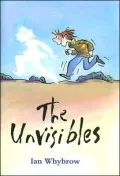
Log in to track your reading progress.
Editorials
Publishers Weekly
Witty plotting and clever characterizations distinguish Whybrow's (the Harry and the Dinosaurs series) novel featuring two 12-year-old British classmates who have little in common-except the need for a good friend. Oliver, who has wild red hair, is quite the cut-up, always "mucking about" at school. In contrast, Nicky is a normal-looking, quiet worrywart who takes pains to avoid being noticed. While looking through a box of items his antique dealer father has acquired, Oliver spies a magazine that describes an ancient Indian trick in which one chants a phrase to become invisible. In a sequence of spot-on slapstick scenes, an unseen Oliver wreaks havoc at school, giving his sarcastic French teacher, a sadistic swimming coach and a pompous older boy their comical due. And he helps Nicky best the class bully in a fight and sabotages Nicky's mother's rapport with an obnoxious suitor. When he realizes that, since he can no longer see the magic phrase on his invisible hand, he cannot reverse the words to break the spell, Oliver turns to Nicky for help. Beneath all the whimsical corkscrew twists, which satisfyingly sort out some family dilemmas, lies an affecting story of the growing friendship that brings each lad a new confidence and sense of self. Kids will hope to er, see, Oliver and Nicky in a follow-up caper. Ages 8-12. (Apr.) Copyright 2006 Reed Business Information.Children's Literature
Oliver Gasper does not have three wishes; in fact, he has one wish that comes true. Oliver, a goofy clown who hates school, wishes he could become invisible. Another twelve-year old boy lives next door to Oliver, Nicky Chew. Nicky is the polar opposite of Oliver. He is the perfect student and never gets in trouble. When Oliver finds the magic chant in a magazine that would grant him his wish, it may be that he goes too far. Oliver and his dad sell furniture and other curiosities. The magazine gets stolen by a peddler of Mr. Gasper's. For the first time, Nicky and Oliver cross paths. In an effort to turn Oliver back into visible and save Mr. Gasper's business, they must find the magazine because Oliver has forgotten the incantation. During this, Nicky's mother is looking for a father figure for her son. Of course, Oliver plays a lot of jokes, pranks, and even causes a little destruction. There are a lot of British words, phrases, and humor in this story. Knowledge of British vocabulary would make the book an enjoyable read. For non-Brits this book is an average story that connects themes such as friendship, truth, revenge, and fun. 2003, Holiday House, Ages 8 to 12.—Kelly Grebinoski
School Library Journal
Gr 4-6-Twelve-year-old neighbors Oliver and Nicky are opposites. Class-clown Oliver is always in trouble while Nicky is quiet and studious. When Oliver finds an old magazine containing the "Indian rope trick" invisibility spell, he can't wait to try it. To his surprise, the incantation actually works, and he disappears. He briefly enjoys causing chaos at school, but quickly learns that being "unvisible" has serious drawbacks. Unfortunately, he can't remember how to reverse the spell and the magazine has been sold to an out-of-town dealer, so he recruits Nicky to help him recover it. Meanwhile, Nicky's single mother is looking for a suitable father figure for him, but he can't stand her latest boyfriend. As the boys search for the missing magazine, they discover that the antique dealer has been smuggling liquor and doesn't take kindly to snoopers. This British import contains many expressions that will be unfamiliar to U.S. readers. There is considerable body humor and some crude language. Some of Oliver's "pranks" verge on criminal. He commits physical assaults, pulls a fire alarm, and impersonates a male teacher making inappropriate personal comments to a female staff member (the man loses his job as a result). For fantasy with a self-discovery theme, steer readers to Bruce Coville's "Magic Shop" books (Harcourt).-Elaine E. Knight, Lincoln Elementary Schools, IL Copyright 2006 Reed Business Information.Kirkus Reviews
A British-style farce with some serious undercurrents, this features a pair of classmates with very different characters, who form an unlikely alliance when one turns himself invisible. Quiet Nicky has perfected the art of keeping a low profile, even to the point of deliberately missing test questions so as not to stand out-but it's his borderline-ADHD neighbor Oliver who inadvertently manages to take the next step, with a swami's mantra copped from an old magazine article. At once exhilarated and frightened, Oliver acts out with a spree of outrageous pranks, even as he enlists Nicky both to cover for him, and to help him get the magazine back from an unscrupulous uncle. Whybrow declines to give Oliver a taste for voyeurism, so this is closer in spirit to Andrew Clements's Things Not Seen (2002) than to Robert Cormier's Fade (1988), and not only do the two lads help each other out in the clutch (and solve some problems in their respective families, too), they turn out to be healthy influences on each other. The action-packed plot even comes with a car chase, but it's the protagonists' inner changes that are likely to leave the deepest impression on readers. (Fantasy. 10-12)Book Details
Published
April 28, 2006
Publisher
New York : Holiday House, [2006], c2003.
Pages
184
Format
Hardcover
ISBN
9780823419722