
National Security, United States - Military Policy, Iraq War, 2003
Log in to track your reading progress.
Overview
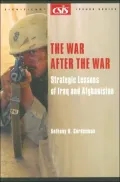
The United States still has every chance to achieve some form of victory in Iraq and Afghanistan if it persists, commits the necessary resources, and accepts the real-world limits on what it can do. But the United States can also lose the peace in both countries as decisively as it won the wars. No one can predict how the combination of nation building, low-intensity combat, and Iraqi and Afghan efforts to recreate their nations will play out over the short term. Regardless, the United States must reshape much of its approach to both countries if it is to win even a limited form of victory. More generally, it must react to the strategic and grand strategic lessons of both conflicts to reshape its defense and foreign policy, as well as the way the U.S. government is organized to deal with terrorism and asymmetric warfare. Following up on his widely praised 2003 book, The Iraq War, Anthony Cordesman now focuses on the war after the war, the lessons to be learned from the "post-conflict" periods, and how they all fit into the broader context of the continuing war on terrorism.Book Details
Published
June 30, 2004
Publisher
Washington, D.C. : CSIS Press, Center for Strategic and International Studies, 2004.
Pages
96
Format
Paperback
ISBN
9780892064502