
Media Studies, General & Miscellaneous Computing, Computers - General & Miscellaneous, Telecommunications Technology
Log in to track your reading progress.
Editorials
From The Critics
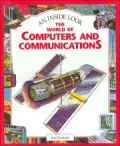
Radios, computers, telephones, and cameras—they're all in this book. Detailed drawings show how color televisions, communication satellites, and cameras work. The author even demonstrates how computers change clay sculptures into realistic moving animals in the movies. He doesn't explain, however, why cell phones with Internet capability are now cheaper and smaller than my first five-function hand-held calculator! Part of the "An Inside Look" series. 2000, Gareth Stevens Publishing, $16.95. Ages 8 to 12. Reviewer: J. Cook SOURCE: Parent Council Volume 8Children's Literature
This book about computers and other communication gadgetry is part of a series called, "An Inside Look," which invites readers to explore such topics as The Environment, Exploring the Oceans, and Discovering the Universe. In this book, readers can explore the workings of such devices as compact discs, satellites, radios and calculators, as well as computers. Each chapter features a different device. In each chapter, a small amount of text explores the topic in general. This text and small, captioned pictures and photographs surround a large cross-section view of the featured device. The language of the text is readable without over-simplifying the content. The illustrations add to the readers' enjoyment and understanding by being clear, large, well diagrammed and thoroughly captioned. A glossary, index, web site list and list of other available resources will be a big help to report writers and others interested in digging deeper. 2000 (orig. 1998), Gareth Stevens, $22.60. Ages 10 up. Reviewer: Judy KatshSchool Library Journal
Gr 4-7-This series title has an attractive, open design featuring a short, modestly technical introduction; large, well-labeled illustrations; and separate blocks of text that develop the main idea of each double-page spread. It covers the many mechanisms humans have contrived to convey sounds, words, and pictures over long distance, moving from printing processes through the workings of cameras of all kinds, and on through sound recording and transmission, radar, and calculators before ending up at computers, computer peripherals, and networking. The objects and procedures chosen are a curious mix; there's a clear explanation of the Hubble Space Telescope and some mention of communications satellites, for example, but nothing about the global-positioning system or the satellite photography used to map the earth. The final explanation and illustration of the "high-speed information highways" linking the world's most powerful computers do not make clear that this is more a construct than a set of physical entities. Nonetheless, this is a broad, appealing overview of a popular topic.-Kathleen Isaacs, Edmund Burke School, Washington, DC Copyright 2001 Cahners Business Information.Book Details
Published
August 1, 2000
Publisher
Milwaukee, WI : Gareth Stevens Pub., 2000.
Pages
48
Format
Binding
ISBN
9780836827279