
World Literature, Fiction Subjects
Available on Bookshop
Write a review
Books.org participates in affiliate programs including Bookshop.org and the Amazon Services LLC Associates Program. We may earn a commission from qualifying purchases made through links on this page, at no additional cost to you.
Log in to track your reading progress.
Overview
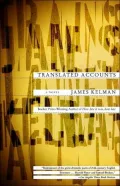
James Kelman's first novel since the Booker Prize winner How late it was, how late in 1994.A groundbreaking, verbally dazzling work of compelling importance from a modern master. The novel is set in an unnamed territory or country that appears to be under military rule. It is narrative in the first person, but the narrator remains anonymous, as do most of the other characters. The language used is an atypical English form, but akin to the basic translation that might appear within a department of an overseas “foreign office”.
Editorials
Publishers Weekly
Scottish writer Kelman, author of the Booker Prize-winning How Late It Was, How Late, here offers up a novel that is like a test case of Adorno's famous phrase, "to write poetry after Auschwitz is barbaric." Adorno meant that, in the service of mass murder, language had cut itself off from its emotional base, the affection that precedes communication. In Kelman's novel, language is deprived of both its beauty and its grammar, and studded with ugly political jargon and neologisms. A note at the beginning explains that the "accounts" that make up the book are narrations of incidents "transcribed and/or translated into English, not always by persons native to the tongue." The accounts are testimonies from some unspecified killing field, with elements reminiscent of Rwanda, Yugoslavia and even the Cultural Revolution in China. In "sections," which are, presumably, holding areas, enemies of some kind are processed. Women and men are beaten, raped and murdered. People are under observation by "securitys," foreign observers interact with suspicious locals and bodies strew the landscape. Resistance cells, or "campaign formations," engage in self-criticism sessions. The unnamed narrators emerge and vanish in a haze of broken English, through which we glimpse a man in a transit area or camp, a resister and a man who may be with the government securitys, as well as others. The language has an ugly, gears-jamming feel to it, with sentences pieced together like: "All concentration now was on this demonstration, fully placed to the elderly man whose role so was primary." Kelman's experiment ultimately fails, since exhausting and desensitizing the reader does not necessarily lead to insight into thenature of state-sanctioned atrocity. Admirers of How Late It Was, How Late will appreciate what Kelman is trying to do in his newest novel, but even they may find it close to unreadable. (Oct. 16) Copyright 2001 Cahners Business Information.Library Journal
Kelman's new novel takes place in an unnamed, vaguely European country in the present or not-too-distant future in the midst of what may or may not be a war. Moving through a landscape that appears increasingly bombed out as the book progresses, the unnamed narrator (or possibly, narrators) seem(s) to be involved in some sort of underground group opposing the country's totalitarian rulers. Ostensibly, these fragmented chapters are a series of first-hand accounts collected by another country's foreign office and roughly translated into English (or so the back cover blurb of the book says; there's nothing in the text itself, other than perhaps the title, to indicate this). Episodic by their very nature, these accounts have a shadowy, dreamlike quality that often makes it difficult to determine the actual truth of events described. Eschewing traditional plot, characterization, and dramatic structure, Kelman's experimental antinovel is a tour de force of a sort, but one that will lose all but the most dedicated readers long before its conclusion. For academic literary collections. Lawrence Rungren, Merrimack Valley Lib. Consortium, Andover, MA Copyright 2001 Cahners Business Information.Book Details
Published
June 15, 2026
Publisher
Knopf Doubleday Publishing Group
Pages
336
Format
Paperback
ISBN
9780385495820