
Teen Fiction - Choices & Transitions, Teen Fiction - Boys & Young Men, Fiction - European People, Places & Cultures, Fiction - Island Peoples, Places & Cultures, Teen Fiction - Romance & Friendship, Fiction - Emotions & Behaviors, Fiction - Schools & Frie
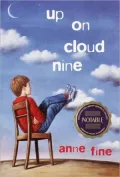
Available on Bookshop
Write a review
Books.org participates in affiliate programs including Bookshop.org and the Amazon Services LLC Associates Program. We may earn a commission from qualifying purchases made through links on this page, at no additional cost to you.
Log in to track your reading progress.
Overview
Ian’s best friend, Stolly, is up on cloud nine. He’s in the hospital, unconscious, and hooked up to machines. The question Ian is trying to answer is: How did Stolly end up there?In a way, Stolly’s always been on cloud nine, living life by his own rules and making those rules up as he goes along. His parents’ careers have them constantly rushing around, so Ian’s family has all but adopted Stolly. That’s why it’s up to Ian to figure out what happened to his best friend. But once the pieces start coming together, the answer doesn’t seem to make any sense.
From the Trade Paperback edition.
While Stolly struggles to regain consciousness in a hospital bed, Ian recalls some of their best and worst times together as he writes a biography of his eccentric best friend.
Editorials
Publishers Weekly
As the boy narrator sits at the hospital bedside of his unconscious friend who has sustained a concussion, he pieces together anecdotes of their shared times, and the darker side of his friend's life starts to emerge. PW wrote in a starred review, "The author mixes equal measures of humor and poignancy into this novel about friendship between two very different yet inseparable boys." Ages 10-up. (Oct.) Copyright 2003 Reed Business Information.VOYA
Ian's best friend, Stolly, is in the hospital—again. In a coma, he is fighting for his life—again. While Ian observes the turmoil that everyone is going through, he begins to wonder how Stolly got into this mess. Stolly's mother, a famous designer, is always away on fashion shoots, and his father, an important judge, is often in chambers until well after midnight, leaving Stolly in the care of Ian's family. Ian decides that he can sort out how Stolly got in this predicament by writing about their lives. Ian's journalistic bent and his remembrances of their friendship bring Ian to conclude without doubt that Stolly tried to kill himself. As parents and nurses skitter in and out, Ian confronts a newly awakened Stolly, eliciting a promise from him to read his own life story and face up to his feelings. Fine provides readers a glimpse of a family that is dysfunctional because of the success of the parents. The fact that they, for the most part, ignore their bright, adventurous son makes the pain Ian's family goes through on Stolly's part even more poignant. Stolly's story is a warning for anyone who knows one of those bright and active teens who skillfully hide painful depression. Ian's stories of the friends' exploits will appeal to those adventure-loving readers, but this book is more of a character study for the thoughtful reader. Students will not flock to this book, but placed in the proper hands, it could make a difference. 2002, Random House, 144p,— Lynn Evarts
Children's Literature
The story begins in a hospital room with two young friends. One is bandaged and unconscious while the other is keeping a watchful bedside vigil. Told through the eyes of Ian with the successful use of childhood flashbacks, the plot leads the reader through many strange twists and turns of an unusual friendship between two very different boys. This isn't the first time that Stolly's character shows quirks—his inability to "see things in the round" has gotten him into trouble. But now "Stol has sailed too close to death" and Ian feels the gravity of the situation. "He might as well be waiting for his funeral. . . . He's just a slab of dead meat on a hospital bed." Fine confirms her qualifications as Children's Laureate of Great Britain and repeat winner of England's highest literary award, the Carnegie Medal. She ably tackles the tortures of a boy who often gets that "weird feeling you're always getting that you're standing outside yourself, watching your own body get on with life without you." Fine successfully allows the reader to share Ian's deeper appreciation of a friend whose interpretation of life strays from the norm. "After all, there's no point being sensible all your life if all you do with the life you've kept safe is to keep being sensible." The account is both amusing and troubling, but it holds the reader's attention throughout. It is a particularly valuable tool in the classroom for discussing acceptance of others' peculiarities. 2003, Dell Yearling/Random House, Ages 8 to 10.— Francine Thomas
From The Critics
Stuart Oliver's father is in court, as usual; his mother is in Nicaragua on a photo shoot; and he, Ian's best friend, Stolly, is in the hospital, hooked up to machines, unconscious. Ian groaned, "Not again," when he heard that Stolly was at Western General. Stolly was constantly having accidents and had done some strange things in the past, but this time he was lying in the hospital bed, looking so distant and lifeless, like he was on cloud nine. Actually, Stolly had always been up on cloud nine—living by his own rules and making life up as he goes. Ian can think back to some zany times with Stolly, like when he insisted that a devil lived on his shoulder but was so quick that every time he moved his head to see it, the devil jumped to the other shoulder or the time when Stolly wrote a thank you letter to his aunts telling them exactly what happened at his house on Christmas day. Even at school, he was infamous for shooting "well past the colorful fiblets into great raging...fantasies." Ian was always the practical, predictable one. He was the one who caught Stolly by the coat when it looked like he would jump off of the viaduct. It is Ian's mother who taught Stolly how to tie his shoes, and it is his house where Stolly spent most of his time. But now, all Ian can do is sit by Stolly's bedside and wait. To pass the time, he decides to write Stolly's life story; a story that attempts to put together the pieces of Stolly's latest mishap. Through Ian's stories and the glimpses of the hospital room, Stolly comes alive as a vibrant, exciting, truly unique child who questions everything around him and marches to his own beat. Stolly is brutally honest, always forcing Ian to look outside of hisexperience and stretch his imagination farther than he had before. Stolly is also quite sensitive and willing to risk humiliation to do what he believes is good. Through his stories, Ian demonstrates how to be a good friend to Stolly and how true friendship can be Stolly's saving grace. A poignant story, mixed with wit and humor, Up on Cloud Nine, by Anne Fine, the author of the book on which the movie Mrs. Doubtfire was based, portrays a realistic struggle of a two children dealing with the imperfections and confusions of life. Stolly is an endearing, quirky character, and Ian demonstrates that the only thing that can save Stolly from himself is true, selfless friendship. 2002, Delacorte,— Kara Fondse Van Drie
From The Critics
Stol is different. While his friend Ian is concerned with sports, Stol contemplates his life—and thinks about ending it. Although he cannot see the value of his life, he is not a bad guy: his attitude does not prevent him from manipulating a charitysponsored raffle so that less fortunate students will benefit from it. Unfortunately, Stol's latest attempt to end his life may be successful. That is why Ian has decided to write this account of Stol's life—to remind his friend, if he wakes up, that his life is worth living. Are Stol's attempts at suicide a consequence of having "too-busy" parents or simply an outgrowth of his swinging emotional state? If he wakes up from the coma, will Ian be able to convince him that life really is worth its imperfections? This novel, challenging and engaging, allows teens to enter the life of two British teens waging a mental and physical war against a common yet often silent battle— suicide. 2002, Delacorte Press, 151 pp.,— Susan Swanson
School Library Journal
Gr 4-7-Fine offers readers another memorable character in Stol, short for Stuart Oliver. With both of his parents occupied with their careers, his friend Ian and Ian's parents have taken the boy into their hearts and home. The opening scene takes place in a hospital where Stol lies in a coma after falling, or possibly jumping, from a third-story window. Ian watches his buddy and surveys his memory for clues as to how the incident could have happened, thinking and writing about their times together. Perfectly happy one minute and desperately uncertain that life is worth continuing the next, Stol is a fascinating explosion of abilities and worldviews. His philosophical viewpoint and way of life are the antithesis of Ian's solid practicality, and he expresses feelings that others are afraid to say. Needing one another, the boys share a friendship that is revealed on every page right to the end. All of Fine's characters leap to life, even Stol's absent and self-centered mother. The effectiveness and morality of Ian's interference with the authorities in convincing them that Stol's act was not a suicide attempt are left open and are sure to spark discussion opportunities for readers. Completely absorbing, this book is a gift to those who know and love others who are different.-Carol A. Edwards, Sonoma County Library, Santa Rosa, CA Copyright 2002 Cahners Business Information.Kirkus Reviews
England's Children's Laureate (Bad Dreams, 2000, etc.) again exercises her unsurpassed gift for memorable, complex character studies. Stolly Oliver lies in a coma, having taken a plunge from an upper story window. At his bedside sit not his often-absent parents (though they're on their way), but Ian Paramour and his smart, loving, adoptive parents, all three of whom have spent so much time caring for Stolly over the years that he's as much a member of their family as his own. More than half convinced that Stolly jumped, Ian works out his anger by reflecting on their life together: his mix of fearlessness and stark vulnerability; the ghastly, wildly inventive horror stories Stolly could make up at the drop of a hat; the left turns his logic often took; his refusal to hide feelings, or to stop challenging authority; his array of little foibles-as Ian puts it, his teachers "all said he had a great future ahead of him, if he could stay alive and learn to tie his laces." With brilliant use of the telling phrase or between-the-lines insight, often delivered with masterful, side-splitting comic timing, Fine brings not just Stolly but every character here to life, and gives them all redeeming qualities-even Stolly's jet-set, fashion-designer mother, though she comes in for lengthy, merciless lampooning. By the time Stolly wakes up, little the worse for wear (beyond a few broken bones), the author has brought readers so close to him and to those who love him that the question of whether he fell by accident or not has become, not irrelevant, but unimportant. It's a triumphant portrait of a young person marching to a beat all his own-but not marching alone. (Fiction. 11-13)From the Publisher
“[Anne Fine] produces a subtle and absorbing tale.”—Publishers Weekly“England’s Children’s Laureate again exercises her unsurpassed gift for memorable, complex character studies.”—Kirkus Reviews, Starred
“Fine outdoes herself here.”—The Horn Book Magazine, Starred
“Completely absorbing.”—School Library Journal, Starred
Book Details
Published
March 4, 2009
Publisher
Random House Children's Books
Pages
160
Format
Paperback
ISBN
9780307492432