
Presidents & Politics (U.S.), Elections & Campaigns, Politics & Government - United States
Available on Bookshop
Write a review
Books.org participates in affiliate programs including Bookshop.org and the Amazon Services LLC Associates Program. We may earn a commission from qualifying purchases made through links on this page, at no additional cost to you.
Log in to track your reading progress.
Overview
When did people first begin voting to choose their leaders?
Ancient Greeks began holding elections in about 500 B.C.E.
Why voting is an important responsibility;
A timeline, photos-and how votes are counted;
Surprising True facts that will shock and amaze you!
Editorials
Children's Literature
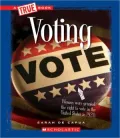
Voting is a critically important part of the democratic process. This is the way we choose our leaders. The Greeks were among the first to vote as long as 2,500 years ago. The Romans, about 500 years later, introduced the secret ballot and the idea of privacy in the voting process. It was many years before the general public had a chance to govern themselves again. In the late 1700's, revolutions in the Western world, including our American Revolutionary War, re-established democracies and voting for government leaders. It was not always so, but now any American-born or naturalized citizen can vote. The presidential election of 2000 created a crisis in the electoral process, which has stimulated interest in an easier more accurate way of placing and counting votes. This informative book is easy to read with large type and lots of photographs. It is part of the "True Book" series on civics. 2002, Children's Press,— Kristin Harris
Children's Literature -
Colorful photos and large text tackle the subject of Voting and gives the reader a concise look at the history and explanation behind our hard won rights. Beginning with the U.S. Constitution of 1791, we learn that within this document is the right to vote given to Caucasian American-born men that are at least eighteen years of age. It took Amendments Fifteen and Nineteen that followed many years later finally allowing African Americans and women to also achieve this right. We find out that American Indians were not considered U.S. citizens until 1924, at which time they were able to vote. The explanation of why we have political parties tells of the importance to group together people of similar interests. Election Day, the first Tuesday in November, allows registered voters to visit local polling places and cast their vote. Absentee ballots and voting by mail also count in this important race. Within polling places there are various ways to cast your ballot including punch card ballots, lever machines, direct recording electronic machines, and Marksense ballots. Whatever way a person administers their choices it's important to stay involved in the system, know your government and not take this Constitution-given right to vote for granted. Social media now plays a part in the candidates drive to spread their messages and we find out that this has become a big part of getting the word out using Facebook, Twitter and YouTube. Timelines, important words, an index and bite sized explanations help the reader grasp an important political lesson. A perfect book for classroom lessons about the democratic process. Part of the "A True Book" series. Reviewer: Toni JourdanSchool Library Journal
Gr 2–4—Jury describes what jurors do, requirements for serving, and how they are chosen for a trial, hear evidence, and reach a verdict. In the second book, De Capua details the requirements one must meet to vote in the United States today. She looks at the history of voting and campaigns, and explains the Electoral College. The format is attractive, with large, color photographs and decorative borders. The short chapters and brief paragraphs make the texts easy to follow. These serviceable books will be useful where collection updates are needed.—Lucinda Snyder Whitehurst, St. Christopher's School, Richmond, VABook Details
Published
September 1, 2012
Publisher
Scholastic Library Publishing
Pages
48
Format
Paperback
ISBN
9780531262153