
Infectious Diseases, Microbiology, Diagnosis
Log in to track your reading progress.
Editorials
From The Critics
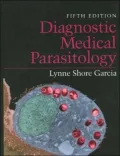
Reviewer: Rebecca T. Horvat, PhD, D(ABMM)(University of Kansas Medical Center)Description: The past four editions of this book have long been known as the standard reference for the clinical laboratory diagnosis of parasitology. This fifth edition continues that tradition with excellent updated information for clinical laboratories.
Purpose: According to the author, the purpose of this latest edition is to provide a "clear, concise, well organized, clinically relevant, cost effective, and practical quality procedures for use in the clinical laboratory setting." This book has definitely accomplished that goal.
Audience: It is written by the world's foremost authority on diagnostic parasitology. Lynne Garcia's books have been used for at least 20 years as the authority in this area. I have no reservation in recommending this newest edition to all laboratory personnel involved in testing patient specimens for parasitology pathogens. This would include individuals in public health and in clinical laboratories. This is also a very good textbook for teaching both medical technologists and residents in pathology.
Features: This is a huge collection of detailed information on human parasites. The first part is organized in a traditional fashion by types of infections. It also includes information on nosocomial and laboratory-acquired infections. An interesting chapter is on the immune response that humans usually produce in response to parasite infections. Each chapter has a boxed area that gives a quick review of key points regarding the laboratory identification methods that are most appropriate. The second part of the book contains details on diagnostic procedures and has a chapter that presents 15 cases on parasitic infections and the procedures used to detect the parasite. A very large appendix, that would be valuable as a separate book, includes color plates of human parasites, worksheets and documents for regulatory compliance, problems that are common in the identification of parasites in human specimens, and, finally, something I have not seen before — "late-breaking" published information that includes an abstract for each article.
Assessment: This is a key contribution to the laboratory diagnosis of parasites. It should be required for all diagnostic laboratories even if they do not perform parasite exams. This would enable them to make recommendations on the collection of appropriate specimens. There have been many changes in the last few years regarding the detection of parasites using new technology to new regulatory requirements as well as the discovery of parasitic diseases that were unrecognized previously. This new edition will be a very useful and valuable resource.
Book Details
Published
December 1, 2006
Publisher
ASM Press
Pages
1202
Format
Hardcover
ISBN
9781555813802