
Join Books.org — it's free

Legends, Myths & Fables - General & Miscellaneous, Fiction - General & Miscellaneous
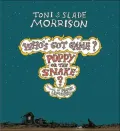
Poppy or the Snake? by Toni Morrison, Slade Morrison, Pascal Lemaitre β€” book cover

Poppy or the Snake?

by Toni Morrison, Slade Morrison, Pascal Lemaitre
Write a review
Log in to track your reading progress.

Overview

In this clever riff on Aesop, Poppy feels guilty when he accidentally drives over Snake, and he decides to risk being bitten in order to free the sassy reptile. But smake wants more. This is a sly tale about who gets the last laugh.

We, the creators of Who's Got Game? were inspired by the wonder of Aesop's Fables -- their vitality, their endless demand for more interpretations. In our versions the original stories are opened up and their moralisitic endings reimagined; the victim might not lose; the timid gets a chance to become strong; the fool can gain insight; the powerful may lose their grip. ANYTHING CAN HAPPEN. More than a play on these beloved fables, Who's Got Game? is AESOP LIVE!

About the Author, Toni Morrison, Slade Morrison, Pascal Lemaitre

Toni Morrison, who is best known for her fiction, teaches at Princeton University. Her novels include Song of Solomon (1977), Beloved (1981), Jazz (1992), Paradise (1998), and Love (2003).

Biography

Toni Morrison has been called "black America's best novelist," and her incredible string of imaginative contemporary classics would suggest that she is actually one of America's best novelists regardless of race. Be that as it may, it is indeed difficult to disconnect Morrison's work from racial issues, as they lie at the heart of her most enduring novels.

Growing up in Lorain, Ohio, a milieu Jet magazine described as "mixed and sometimes hostile," Morrison experienced racism firsthand. (When she was still a toddler, her home was set on fire with her family inside.) Yet, her father instilled in her a great sense of dignity, a cultural pride that would permeate her writing. She distinguished herself in school, graduating from Howard and Cornell Universities with bachelor's and master's degrees in English; in addition to her career as a writer, she has taught at several colleges and universities, lectured widely, and worked in publishing.

Morrison made her literary debut in 1970 with The Bluest Eye, the story of a lonely 11-year-old black girl who prays that God will turn her eyes blue, in the naΓ―ve belief that this transformation will change her miserable life. As the tale unfolds, her life does change, but in ways almost too tragic and devastating to contemplate. On its publication, the book received mixed reviews; but John Leonard of The New York Times recognized the brilliance of Morrison's writing, describing her prose as "...so precise, so faithful to speech and so charged with pain and wonder that the novel becomes poetry."

Over time, Morrison's talent became self-evident, and her reputation grew with each successive book. Her second novel, Sula, was nominated for a National Book Award; her third, 1977's Song of Solomon, established her as a true literary force. Shot through with the mythology and African-American folklore that informed Morrison's childhood in Ohio, this contemporary folktale is notable for its blending of supernatural and realistic elements. It was reviewed rapturously and went on win a National Book Critics Circle Award.

The culmination of Morrison's storytelling skills, and the book most often considered her masterpiece, is Beloved. Published in 1987 and inspired by an incident from history, this post-Civil War ghost story tells the story of Sethe, a former runaway slave who murdered her baby daughter rather than condemn her to a life of slavery. Now, 18 years later, Sethe and her family are haunted by the spirit of the dead child. Heartbreaking and harrowing, Beloved grapples with mythic themes of love and loss, family and freedom, grief and guilt, while excavating the tragic, shameful legacy of slavery. The novel so moved Morrison's literary peers that 48 of them signed an open letter published in The New York Times, demanding that she be recognized for this towering achievement. The book went on to win the Pulitzer Prize; and in 2006, it was selected by The New York Times as the single best work of American fiction published in the last 25 years.

In addition to her extraordinary novels, Morrison has also written a play, short stories, a children's book, and copious nonfiction, including essays, reviews, and literary and social criticism. While she has made her name by addressing important African-American themes, her narrative power and epic sweep have won her a wide and diverse audience. She cannot be dismissed as a "black writer" any more than we can shoehorn Faulkner's fiction into "southern literature." Fittingly, she received the Nobel Prize in 1993; perhaps the true power of her impressive body of work is best summed up in the Swedish Academy's citation, which reads: "To Toni Morrison, who, in novels characterized by visionary force and poetic import, gives life to an essential aspect of American reality."

Good To Know

Chloe Anthony Wofford chose to publish her first novel under the name Toni Morrison because she believed that Toni was easier to pronounce than Chloe. Morrison later regretted assuming the nom de plume.

In 1986, the first production of Morrison's sole play Dreaming Emmett was staged. The play was based on the story of Emmett Till, a black teen murdered by racists in 1955.

Morrison's prestigious status is not limited to her revered novels or her multitude of awards. She also holds a chair at Princeton University.

Reviews

There are no reviews yet. Log in to write one.

Editorials

Publishers Weekly

A smattering of picture books contribute to existing series. Mother and son collaborators Toni and Slade Morrison bring forth another modern take on an Aesop fable in Who's Got Game? Poppy or the Snake, illus. by Pascal Lemaetre. Poppy tells his grandson the tale of a "sass-mouthed" snake who he accidentally ran over with his truck years ago. The snake convinces Poppy to take him home for a while ("You mean to tell me you not going to take me home and give me something to eat?"). This reworking puts the focus on the value of being careful and aware. Copyright 2004 Reed Business Information.

Children's Literature

Toni Morrison and her son, Slade, are retelling a series of Aesop's fables. Their third and most recent is Who's Got Game? Poppy or the Snake? The book begins as a young boy tells his grandfather, Poppy, how he can't pay attention in school. Poppy relates the story of how he saved a snake from death after nearly killing it, escaped death from the ungrateful snake's poison by paying attention, and got himself a new pair of "remembering boots" of the "softest, shiniest snakeskin." The book is a combination of straight narration and comic-book graphic-style expression brought to life by the snake's lively, dramatic dialogue. The snake, full of attitude, defends his position: "You gonna blame me for having poison fangs? I ain't got no hands to fight with, like you do. And if you look close you'll see I don't got no wings to fly away on." It is the snake's voice which turns a potentially preachy tale into a funny, morality story. 2003, Simon and Schuster, Ages 5 up.
β€”Susie Wilde

VOYA

This third entry in a series of picture books based on Aesop's fables and done with an updated, African American flare (following Who's Got Game? The Ant or the Grasshopper? and Who's Got Game? The Lion or the Mouse) uses the considerable talents of the mother-son Morrison team as well as illustrator Lemaitre. It is visually pleasing, contains ear-catching dialogue, and undeniably cool qualities that should appeal to all ages. In the original tale, a snake kills a farmer's son, and the farmer tries to kill the snake, but he succeeds only in cutting off his tail. With both of them having such overt reminders of their losses, they can never again live in peace. In the Morrisons' treatment, however, the kind but cagey Poppy accidentally parks his pickup on top of the snake. He feels so guilty about having done so that he agrees to help the poor beast and nurses him back to health. The snake accepts the kindness from Poppy as he heals, but he never does get over his injury. This version has a charming surprise ending that is quite different from the original and should please readers of all ages. The book is filled with delightful illustrations with lots of details, from armadillos and coyotes out in the Bayou to street musicians in town. The author-illustrator team brings freshness and a touch of cool, helping to bring Aesop into the new millennium. VOYA Codes 4Q 3P M J S (Better than most, marred only by occasional lapses; Will appeal with pushing; Middle School, defined as grades 6 to 8; Junior High, defined as grades 7 to 9; Senior High, defined as grades 10 to 12). 2004, Scribner/S & S, 40p.; Illus., Ages 11 to 18.
β€”Tim Brennan

Library Journal

Morrison and son continue their retelling of Aesop's fables. Copyright 2003 Reed Business Information.

Book Details

Published
November 1, 2004
Publisher
Scribner
Pages
40
Format
Hardcover
ISBN
9780743222495

More by Toni Morrison, Slade Morrison, Pascal Lemaitre

Similar books