
Fiction, World Literature, Fiction Subjects
Available on Bookshop
Available on Amazon
Write a review
Books.org participates in affiliate programs including Bookshop.org and the Amazon Services LLC Associates Program. We may earn a commission from qualifying purchases made through links on this page, at no additional cost to you.
Log in to track your reading progress.
Overview
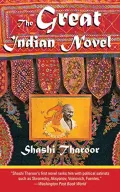
In this award-winning novel, Tharoor has masterfully recast the two-thousand-year-old epic, The Mahabharata, with fictional but highly recognizable events and characters from twentieth-century Indian politics. Nothing is sacred in this deliciously irreverent, witty, and deeply intelligent retelling of modern Indian history and the ancient Indian epic The Mahabharata. Alternately outrageous and instructive, hilarious and moving, it is a dazzling tapestry of prose and verse that satirically, but also poignantly, chronicles the struggle for Indian freedom and independence.In this widely acclaimed novel, Shashi Tharoor has masterfully recast the 2,000-year-old epic The Mahabharata with fictional, but highly recognizable, events and characters from 20th-century Indian politics.st and randy, like a miniseries that won't quit. . . . It should entertain everyone."--Washington Post Book World.
Synopsis
"A wickedly funny satire, sparing no one, not even Mahatma Gandhi . . . Just thinking about it makes me want to go back and reread it."—Fareed Zakaria, New York Times Book ReviewIn this award-winning novel, Shashi Tharoor has masterfully recast the two-thousand-year-old epic, The Mahabharata, with fictionalized but highly recognizable events and characters from twentieth-century Indian politics. Blending history and myth, Tharoor directs his satire as much against Indian foibles as the bumbling of the British rulers to chronicle the struggle for Indian freedom and independence.
The Great Indian Novel is a dazzling tapestry of prose and verse that is alternately outrageous and instructive, hilarious and moving,
Editorials
Publishers Weekly -
The delightfully suspect and satirical tone of Tharoor's title informs and enlivens his monumental tale. In an opening disclaimer, the author cites the Mahabharata , an ancient Hindu epic, as the source of his inspiration. The story he retells, however, is also a thinly veiled account of the people and events that shaped India during the struggle for independence from British rule. Tharoor recasts these in a mythological, fictive realm, skillfully interweaving elements of traditional Eastern and Western literature. The epic, the sonnet, the novel and the folk tale all help to shape the narrative, just as history and myth, dream and reality intertwine in every chapter, calling into question the validity of categories. ``One must be wary of history by anecdote,'' warns the narrator; one must be wary of ``history'' itself, suggests Tharoor. Despite his stereotypical treatment of British and Indian characters, he animates history with the imagination of an artist and the philosophy of a sage. Throughout, Tharoor appropriates titles, phrases and figures from the work of a pantheon of ``first-world'' writers, ranging from E. M. Forster and Rudyard Kipling to Ernest Hemingway and Arthur Koestler and even including his contemporary Salman Rushdie--a subtle but potent reversal of the traditional tide of cultural colonialism. Apr.Library Journal
Basing his convoluted story on the Mahabharata , with its 18 chapters or Parvans and similar incidents or characters e.g., a blind king; five brothers sharing one wife, Tharoor coalesces myth, dreams, folklore, religion, and legend in this first-person, near-death life narration of Ved Vyas. The reader suspends disbelief as the garrulous old man omnisciently relates secret conversations, lustful couplings, the assassination of Ganga Data read Ghandi, and the intimacies of Lord and Lady Drewpad read Mountbatten. Overambitious Tharoor amalgamates the epic's components with India's freedom struggles with Great Britain. Intermittently humorous, satiric, and fantastic, with word-play and recurrent verse, this work is most effective when discussing Data/Ghandi: his enemas, celibacy, hunger strikes, and tragic failure to bring peace and well-being to India, where today corruption and double-dealing insidiously multiply.-- Glenn O. Carey, Eastern Kentucky Univ., RichmondBook Details
Published
September 1, 2011
Publisher
Skyhorse Publishing
Pages
320
Format
Paperback
ISBN
9781611453188