
Fiction - Short Story Collections (Single Author), Fiction - General & Miscellaneous, Fiction - Horror, Monsters & Ghosts
Available on Bookshop
Write a review
Books.org participates in affiliate programs including Bookshop.org and the Amazon Services LLC Associates Program. We may earn a commission from qualifying purchases made through links on this page, at no additional cost to you.
Log in to track your reading progress.
Overview
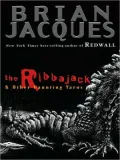
What if revenge were a monster of your own creation, and all you needed to summon it were enough hatred and enough imagination? Which of you would really be the monster? From vengeance monsters to haunted schools to the threat of a modern-day Medusa, New York Times bestselling author Brian Jacques spins six all-new tales of horror and suspense. Read on, but be careful. . . .A collection of six short stories which feature a variety of monstrous creatures by the author of the Redwall series.
Editorials
From Barnes & Noble
What would happen if your hatred and your imagination were powerful enough to summon a literal monster of revenge? In "The Ribbajack," a boy discovers the terrifying answer to that question. The master of Redwall in a different light.Publishers Weekly
Jacques, working more in the vein of his Seven Strange and Ghostly Tales than his Redwall fantasies, offers up a half dozen short horror/morality tales. The title story concerns Archibald Smifft, a truly fiendish 11-year-old being raised at a British boarding school, whose evil plan to conjure a fearsome beast called the Ribbajack backfires in spectacular fashion. In "A Smile and a Wave," a solitary trip through a haunted school library teaches a girl gratitude for her home and mother. "The All Ireland Champion Versus the Nye Add," a neatly constructed fish tale, crackles with the feel of a story told aloud at a pub, thanks to a spirited narrator ("Well, I've told you the tale now, so I'll go on me way an' bid ye good day. But it's a true story...."). The volume closes with "Rosie's Pet," a werewolf yarn that revels in its British trappings and, especially, in its own playful attitude. The plots are familiar and at times feel fragmentary, but Jacques's deft wordplay and masterly tone add compensatory gusts of pleasurable thrills. Ages 10-up. (May) Copyright 2004 Reed Business Information.School Library Journal
Gr 5-8-Jacques offers six original ghost stories to follow up on Seven Strange and Ghostly Tales (Putnam, 1991). The title story is more grotesque than scary, and the ghost in "A Smile and a Wave" is inexplicably evil, existing only to scare the main character into wearing her detested coat. The most satisfying selections are "Miggy Mags and the Malabar Sailor," in which a mongoose champions a young girl against her abusive uncle, and "Rosie's Pet," a preadolescent werewolf love story. The heavy northern English dialect used in the tellings would work well in an audio book, but may deter some readers. While this is an acceptable addition to general collections, true fans of the scary and strange will find more satisfaction in the short-story collections by Australian writer Paul Jennings, such as Unreal! (Formac, 1992).-Farida S. Dowler, formerly at Bellevue Regional Library, WA Copyright 2004 Reed Business Information.Kirkus Reviews
Jacques turns his storytelling talents from the world of animal fantasy to the sphere of human and animal monsters in this collection of six weird tales. The stories incorporate a variety of horror and occult tropes and/or mythological characters, e.g., conjuring gone wrong in "The Ribbajack," a malevolent ghost in "A Smile and a Wave," naiads in "The All Ireland Champion and the Nye Add," a paralyzing visit from an ancient Greek in Huma D'Este, and werewolves in "Rosie's Pet." Sly humor and suspenseful plotting will keep readers' interest engaged. Short poems introduce each story and an omniscient narrator leads the reader adeptly to the (mostly) surprise endings. Jacques's leisurely approach to narrative works better at a longer length when he uses fewer literary shortcuts (the stereotype British colonial gent, the vaudeville Irish peasant), while his rendering of dialect jars less in his animal fantasies. Lovers of the Redwall and Castaways of the Flying Dutchman series will want to read these stories, which will appeal most strongly to Jacques's fans. (Fiction. 12-14)Book Details
Published
August 17, 2006
Publisher
Penguin Group (USA)
Pages
176
ISBN
9781101143957