
Electronic Publishing, Video & Performance Art, Desktop Publishing, Modern Art, Computer Graphics - General & Miscellaneous
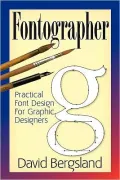
Available on Bookshop
Write a review
Books.org participates in affiliate programs including Bookshop.org and the Amazon Services LLC Associates Program. We may earn a commission from qualifying purchases made through links on this page, at no additional cost to you.
Log in to track your reading progress.
Overview
Why do you want to use Fontographer?For the fun of it!
When I received the opportunity to go back to my roots, and see what the new Fontographer was like, I was a little concerned. I had just spent nine years painfully teaching myself to letterspace by hand, to write OpenType features, and to become accustomed to the tool set of FontLab. Don’t get me wrong, FontLab is a great program and I am grateful for what I have learned. There are still a few features of FontLab that, as a professional font designer, I cannot do without. But I was taken by surprise.
Fontographer brought the fun back!
It is still the same marvelous program with which I first learned to design fonts. The drawing interface is still clean, clear, and elegant. I still works the way I have learned to work over the past two decades of digital graphic design. I found pure joy in drawing again. Fontographer is a wonderful drawing experience. It has been a real joy to experience that fun again. After nearly a decade in FontLab, font design is fun again.
To quote from the book:
“Fontographer is an application which appeals to experienced graphics designers with a background in PostScript illustration… The majority of designers working in the mid-1990s had a copy of Fontographer…and everyone probably used it [at least a little].
Fontographer had [and still has] a unique and intuitive set of drawing tools that enable amateurs of that era to enter the world of font design. I’m talking amateurs in the sense that John Baskerville considered himself an amateur—as I also consider myself, though I am certainly not in Baskerville’s league. For me, font design is a beloved sideline with which I indulge myself. It’s become a treasured tool I use in my current trade—book writing, designing, and production.”
Who is this book written for?
Fontographer is an application which appeals to experienced graphics designers with a background in PostScript illustration—especially those with (Altsys, Aldus, or Macromedia) FreeHand experience from version 7 and earlier. This vector drawing program set the standard for ease of use and innovation in the early days of digital design. The near majority of designers working in the mid-1990s had a copy of Fontographer. It came free with the FreeHand Graphics Studio first released in 1995—and more than 50,000 designers used Fontographer because of it [at least a little].
Fontographer had [and still has] a unique and intuitive set of drawing tools that enable amateurs of that era to enter the world of font design. I’m talking amateurs in the sense that John Baskerville considered himself an amateur—as I also consider myself, though I am certainly not in Baskerville’s league. For me, font design is a beloved sideline with which I indulge myself. It’s become a treasured tool I use in my current trade—book writing, designing, and production.
What about younger designers?
There are a couple of problems.
First are the actual drawing skills required.
The good news here is that Fontographer is easy to learn and quick to comprehend. Its drawing tools can be added to your creative repertoire in a few weeks. This is especially true for simple designs like sans serif fonts. But if you work hard you can draw almost any kind of font because the actual letter shapes are relatively simple.
The problem is seen in the sophistication of those simple shapes. A circle or a point does not stop at the measurement lines but goes slightly beyond them to produce those optical adjustments which are absolutely essential to make these simple shapes line up along the lines of letters and words that make up a sentence, paragraph, and column of type. Though many 21st century designers appear to destroy the old rules, we typographers know that the actual appearance of freedom from antiquated rules is very difficult to achieve while maintaining the readability which content requires for communication.
This brings us to the second problem: typography
I blithely tossed in the term typographer in the last sentence. That simple term is not commonly understood or comprehended today. In addition, moving along the path from typesetter to typographer takes time. Study is required. Experience is essential. This is not something that can be entered into lightly or easily. (Well, I take that back. It is commonly entered lightly and easily with disastrous results. Examples of incredibly ineffective typography are easy to find and exceedingly common. I am just so glad to know you are not listed among those design anarchists and contemporary cultural terrorists.)
Experience can be acquired quite quickly with a lot of study and diligent effort. Within just a few years, you can be producing gorgeous type designs. But you will need to work at it.
Book Details
Published
October 29, 2011
Publisher
CreateSpace
Pages
230
Format
Paperback
ISBN
9781466479401